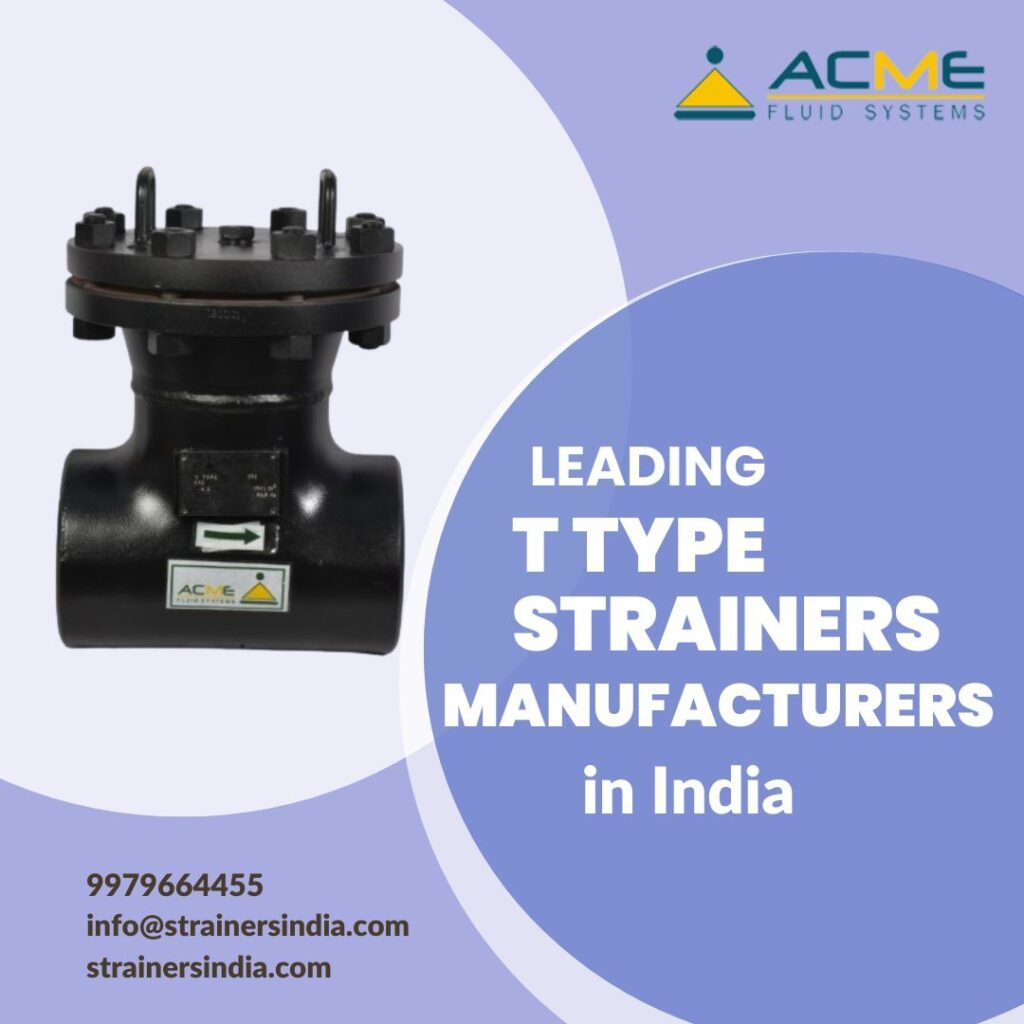
A T-type strainer is a mechanical filtration device used in pipelines to remove solid particles from liquids or gases. Named for its “T” shape, it consists of a horizontal pipe with a perpendicular branch housing the straining element. This design allows for effective filtration while maintaining a compact form factor.
Key Components
- Body: Typically constructed from durable materials like stainless steel or carbon steel to withstand high pressures and corrosive environments.
- Filter Element: A mesh or perforated screen that captures debris. The mesh size can vary depending on the application’s filtration requirements.
- Drain Valve (Optional): Facilitates easy removal of collected debris without disassembling the strainer.
- Flanges: Enable secure connection to the pipeline system.
How It Works
Fluid enters the strainer through the inlet, flows through the filter element where solid particles are trapped, and exits through the outlet. The collected debris remains in the strainer until it’s removed during maintenance.
Advantages
- High Flow Capacity: The design accommodates large volumes of fluid with minimal pressure drop.
- Easy Maintenance: Quick-opening covers allow for straightforward access to the filter element for cleaning or replacement.
- Versatility: Suitable for both horizontal and vertical installations, making them adaptable to various piping configurations.
- Safety: In hazardous processes, the cover can be opened safely without draining the fluid, reducing exposure risks.
Applications
T type strainers are widely used across multiple industries:
- Water Treatment Plants: To filter out sediment and protect downstream equipment.
- Chemical Processing: To remove contaminants from liquid chemicals, ensuring product purity.
- Oil & Gas: To filter out particulates from hydrocarbons, safeguarding pumps and valves.
- HVAC Systems: To eliminate debris from water or air streams, enhancing system efficiency.
Installation Guidelines
- Select Appropriate Size: Ensure the strainer matches the pipeline’s diameter and flow rate requirements.
- Choose Installation Point: Position the strainer where it’s easily accessible for maintenance.
- Prepare the Pipeline: Cut the pipe at the designated point, ensuring clean and square cuts for proper alignment.
- Install the Strainer: Apply pipe sealant to the threads, connect the strainer, and tighten securely.
- Insert Filter Element: Place the mesh or perforated screen into the strainer body.
- Add Additional Components: Install valves or gauges as required by the application.
- Check for Leaks: Inspect the installation for any leaks before resuming operation.
Maintenance Tips
- Regular Inspection: Periodically check the strainer for debris accumulation.
- Cleaning: Shut off the fluid flow, relieve pressure, and remove the cover to access the filter element. Clean or replace the element as necessary.
- Reassembly: Ensure the filter element is correctly seated, close the cover securely, and restore the system to operation.
Limitations
- Debris Capacity: T-type strainers are best suited for systems with low to moderate debris loads.
- Pressure Drop: If not cleaned regularly, accumulated debris can cause a significant pressure drop across the strainer.
Selection Considerations
- Flow Rate: Choose a strainer that can handle the system’s flow rate without causing excessive pressure loss.
- Mesh Size: Select a mesh size appropriate for the size of particles to be filtered.
- Material Compatibility: Ensure the strainer materials are compatible with the fluid’s chemical properties and temperature.
Post Views: 70