Web design is often seen as a creative task focused on colors, layouts, and visuals. While creativity is important, design without direction rarely delivers business value. A successful website does more than look attractive—it supports business goals such as lead generation, sales, brand trust, and customer engagement.
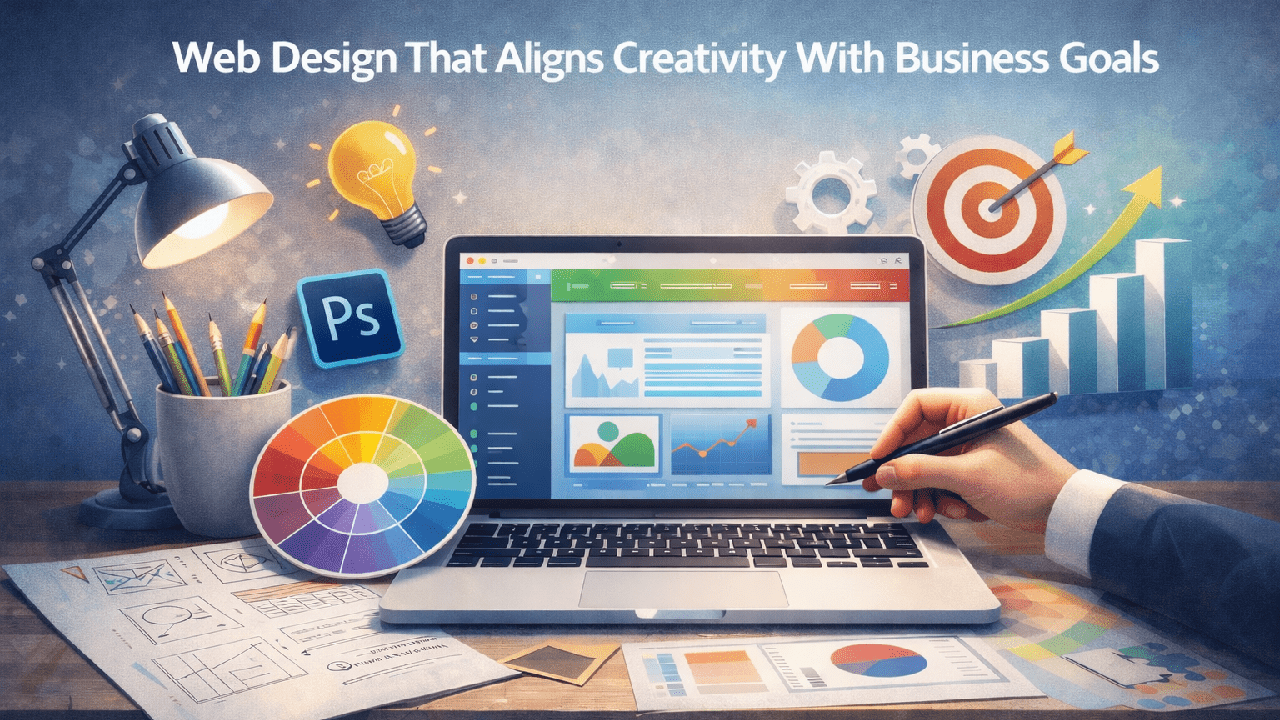
Modern web design is about balance. Creativity must work alongside strategy. When design decisions are aligned with business objectives, websites become strong tools that support growth, communication, and performance. This blog explains how creative web design can be structured around real business goals and why this approach creates long-term value.
Understanding the connection between creativity and business goals
Creativity in web design helps capture attention. Business goals give that attention a purpose. When both work together, users not only notice a website but also take meaningful action.
Creativity without direction creates confusion
A visually impressive website can still fail if users cannot understand:
- what the business offers
- how it helps them
- what action to take next
Too many effects, animations, or design ideas can distract users from the core message. Creativity must serve clarity.
Business goals without creativity lack impact
On the other hand, websites that focus only on goals but ignore creativity may look dull or outdated. These sites fail to engage users emotionally. Creativity helps:
- build connection
- improve brand recall
- increase user interest
The strongest websites combine both.
Why aligning web design with business goals matters
Websites exist to support outcomes, not just appearance. When design aligns with goals, every page and element contributes to measurable results.
Better return on investment
A website designed with purpose:
- converts more visitors
- supports marketing campaigns
- reduces bounce rates
- increases customer trust
This improves return on investment over time.
Clear communication builds confidence
When users clearly understand what a business does and how to engage, they feel confident. Confidence leads to action, whether that is a purchase, inquiry, or booking.
Identifying business goals before starting design
Alignment begins before design work starts. Understanding business goals ensures creative ideas stay relevant.
Common website business goals
Different businesses may focus on:
- lead generation
- online sales
- appointment bookings
- brand awareness
- customer support
Each goal requires a different design approach.
Knowing the target audience
Design should match the audience’s:
- expectations
- preferences
- device usage
- browsing behavior
A business website aimed at corporate clients will differ greatly from one targeting young consumers.
How creative design supports clear messaging
Design is not decoration; it is communication. Every visual choice influences how messages are received.
Visual hierarchy guides user attention
Creative design uses:
- font size
- contrast
- spacing
- placement
This directs attention to key information like:
- value propositions
- services
- calls-to-action
Without visual hierarchy, important messages get lost.
Color psychology influences perception
Colors affect emotions and behavior. Creative but intentional color choices help:
- highlight important sections
- create trust
- support brand personality
Random color use weakens clarity and brand identity.
Layout planning that supports user journeys
A website should guide users smoothly from entry to action. This requires careful layout planning.
Clear navigation reduces friction
Creative menus should still be easy to understand. Users should quickly find:
- services
- pricing
- contact information
- key pages
Overly complex navigation harms usability and business outcomes.
Page flow influences conversions
Pages should follow a natural flow:
- Introduce the problem
- Present the solution
- Build trust
- Encourage action
Creative layouts should support this journey instead of interrupting it.
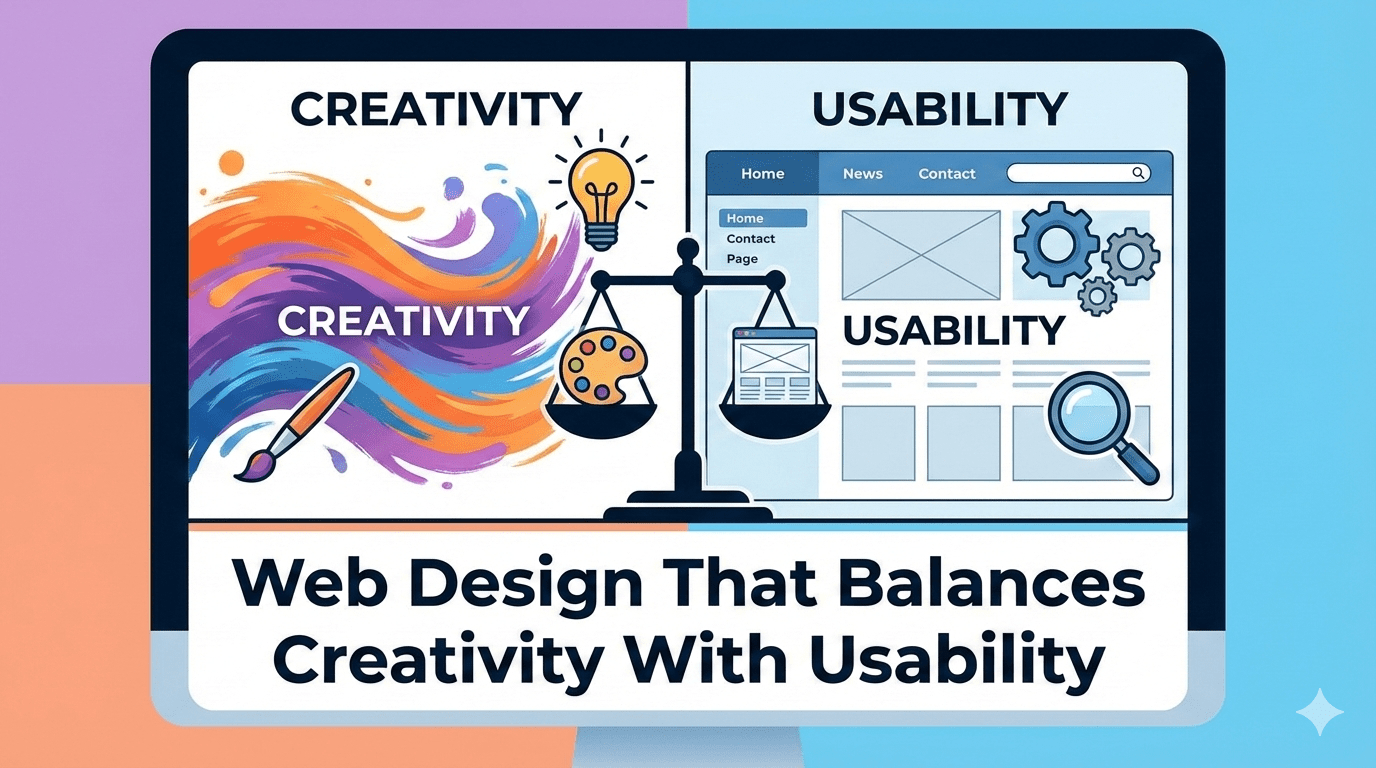
Balancing visual creativity with usability
Usability ensures that creativity does not interfere with function.
Design should never confuse users
Creative elements must not:
- hide important information
- slow down the website
- make text hard to read
Usability keeps websites accessible to all users.
Consistency supports learning
When creative styles remain consistent:
- users feel familiar
- navigation becomes easier
- brand identity strengthens
Consistency makes creativity sustainable across pages.
Mobile-friendly creativity supports modern business needs
Mobile users form a large portion of website traffic. Creativity must work well on smaller screens.
Responsive creative elements
Creative design should adapt to:
- different screen sizes
- touch interactions
- varying internet speeds
Design elements must remain functional, not just decorative.
Mobile experience influences results
A creative website that fails on mobile devices loses:
- leads
- sales
- trust
Mobile-first thinking ensures creativity supports real usage.
Content design plays a key role in business alignment
Words and visuals must work together. Design should make content easier to consume.
Simple language improves clarity
Content should be:
- easy to read
- direct
- for nothing from jargon
Design supports this by using spacing, headings, and readable fonts.
Structuring content for business goals
Creative layouts can highlight:
- benefits over features
- customer pain points
- clear solutions
This improves understanding and engagement.
Performance and speed support creative design
A slow website reduces the impact of even the best design.
Optimized creative elements
Designers must consider:
- image optimization
- minimal animations
- clean code
Creativity should not compromise performance.
Speed builds trust
Fast websites feel reliable. Reliability strengthens brand credibility and user confidence.
Measuring success through design-driven results
Design aligned with business goals is measurable.
Key performance indicators include:
- conversion rates
- time spent on site
- bounce rates
- lead submissions
- sales activity
Creative decisions should support improvements in these areas.
Continuous improvement
Design alignment is ongoing. Businesses should:
- analyze user behavior
- adjust layouts
- refine content
This keeps creativity relevant as goals evolve.
Why professional expertise helps align design and goals
Aligning creativity with business goals requires experience in both design and strategy. Many businesses choose to work with professional teams for this reason.
A reliable web designing company in dubai understands:
- local market behavior
- business expectations
- user experience principles
Rather than focusing only on visuals, such teams connect design decisions with measurable outcomes.
As an example, Inter Smart is often associated with structured design approaches that prioritize clarity, usability, and business alignment rather than surface-level creativity.
Long-term value of goal-aligned creative design
When creativity serves business strategy, websites deliver lasting value.
Stronger brand identity
Consistent creative design builds recognition and trust over time.
Better scalability
A well-planned design framework allows:
- easy updates
- new content additions
- feature expansion
This supports business growth.
Reduced redesign costs
When design is built on strategy, it ages better. Businesses avoid frequent redesigns caused by poor planning.
Creativity Works Best With Purpose
Creative web design achieves real impact only when it supports clear business goals. Visual appeal alone cannot drive growth, just as strategy without creativity struggles to engage users. When both work together, websites become powerful tools that communicate value, build trust, and encourage action.
Businesses that invest in purposeful design gain more than a good-looking website. They gain a digital platform that supports decision-making, strengthens customer relationships, and contributes to long-term success. Aligning creativity with business goals is not a trend—it is a smart approach that turns design into a measurable business asset.