The construction industry is evolving rapidly, and steel detailing is keeping pace. With modern buildings growing in size, shape, and complexity, the role of steel detailers has shifted from basic drafting to a critical link in the construction cycle, connecting design, fabrication, erection, and asset management.
Steel detailing services produce highly accurate drawings that guide fabricators and erectors in building structures safely and efficiently. As technology has advanced, so has the precision, speed, and scope of these services, enabling some of the world’s most innovative structures—like Denver’s Union Station and Austin’s Circuit of the Americas—to take shape.
From Manual Drafting to 3D Modeling
Traditionally, steel detailing was a manual process using drafting machines, templates, and mathematical tables. This labor-intensive method left room for human error and slowed down delivery.
The arrival of CAD revolutionized the field, allowing detailers to create 2D and 3D digital drawings with greater accuracy. CAD required not only drafting skills but also knowledge of engineering principles and fabrication processes.
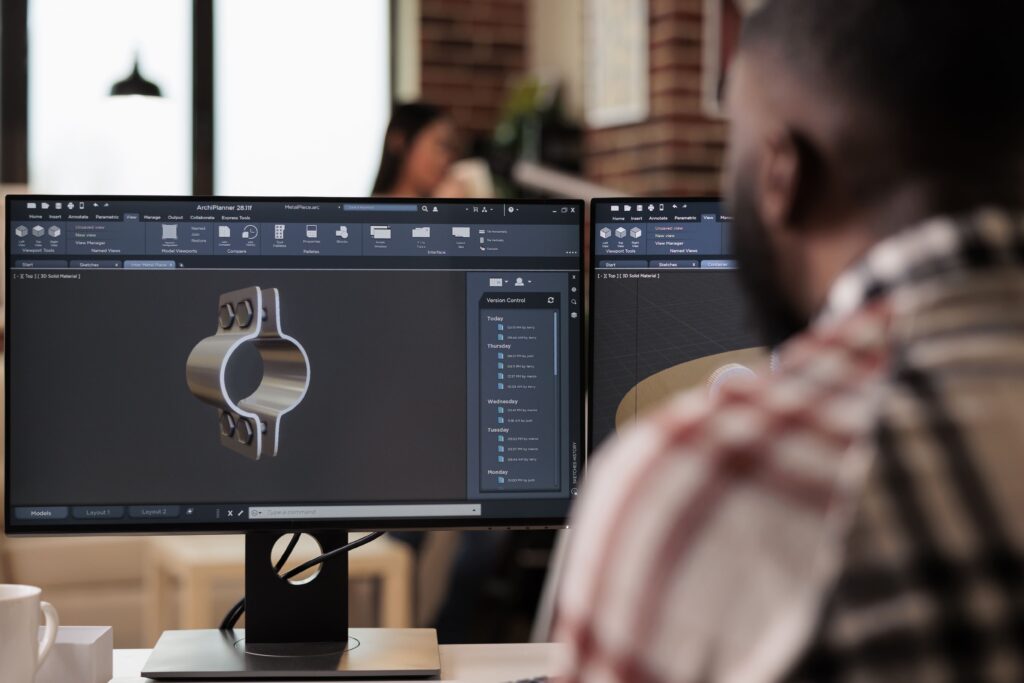
Today, 3D BIM modeling has taken steel detailing further. Software like Tekla Structures allows detailers to generate intelligent 3D models that provide better visualization, reduce misalignment, and improve coordination across teams. These models produce precise shop drawings, erection drawings, and bills of material, all of which drive fabrication and installation with minimal errors.
The result: higher-quality steel structures, faster turnaround, and reduced waste.
Key Techniques Driving Sustainable Detailing
Modern detailing methods emphasize not only accuracy but also sustainability and constructability.
Provides a virtual representation of structures, ensuring every bolt, weld, and cut length is accounted for before fabrication begins.
Offer precise details of each element, guiding fabricators in manufacturing beams, columns, and connections without guesswork.
Erection Drawings
Supply step-by-step instructions for site crews, reducing misfits and downtime.
BIM Standards
Ensure models comply with regional codes and industry best practices, which is critical for safety and sustainability.
Together, these techniques help cut errors, save material, and deliver greener, more efficient steel structures.
Prominent Steel Detailing Software
The backbone of modern detailing lies in powerful software tools. Some of the most widely used include:
Tekla Structures
A BIM platform that supports end-to-end detailing, fabrication, and erection. Its intelligent models improve coordination and automate shop drawings, CNC data, and reports.
Advance Steel (Autodesk)
Built on AutoCAD, it offers a large library of connections, parametric modeling, and automation features for shop and general arrangement drawings.
ProSteel (Bentley)
Provides 3D modeling and parametric assemblies, with strong interoperability for concrete and steel projects.
Bocad (AVEVA)
A BIM/FIM solution that integrates design and fabrication, with advanced nesting and weld traceability for lifecycle management.
TecnoMETAL
A 3D BIM solution that verifies connections, extracts CAM data, and integrates easily with Revit and SolidWorks.
These platforms share common benefits: reduced human error, streamlined revisions, automated documentation, and compatibility with fabrication machinery.
Emerging Technologies in Steel Detailing
The future of detailing lies in integrating advanced technologies that improve accuracy, collaboration, and efficiency.
3D BIM Technology
Information-rich BIM models act as a single source of truth, simplifying interdisciplinary collaboration, handling complex geometries, and supporting quick modifications. They also streamline extraction of material lists, dispatch schedules, and as-builts.
Nesting Software
By optimizing how parts are cut from raw steel sheets, nesting software reduces waste, improves yield, and generates NC files for CNC machines. It ensures faster cutting and cost savings on materials.
CNC Machines
CNC-controlled equipment translates digital shop drawings directly into manufactured components. From cold roll forming of purlins to cutting bolts and clips, CNC improves consistency and reduces manual intervention.
Together, these innovations are making steel detailing more integrated, sustainable, and aligned with the digital future of construction.
Why Outsourcing Steel Detailing Makes Sense
Steel detailing is highly specialized. Accuracy is paramount—any mistake in a drawing can cascade into costly fabrication errors, site delays, and safety risks. For this reason, many construction firms turn to dedicated steel detailing companies.
Benefits of Outsourcing:
- Specialized Expertise
Outsourced teams bring deep knowledge of codes (AISC, NISD, IS standards), complex connections, and BIM workflows. Their experience reduces errors and ensures compliance. - Cost Efficiency
By outsourcing, companies avoid the expense of software licenses, hardware, and training. Resources can scale up or down with project load, reducing overhead. - Faster Turnaround
Detailing partners often operate with dedicated project managers and time zone advantages, enabling 24/7 work cycles and faster revisions. - Enhanced Accuracy
Top firms apply rigorous QA/QC processes, combining software validation with manual checks to deliver reliable drawings and data. - Seamless BIM Integration
Outsourced teams provide models compatible with wider project BIM environments, enabling clash detection, coordinated erection sequences, and improved stakeholder visualization.
The Future of Steel Detailing
Steel detailing is no longer just about producing drawings—it is about integrating design, fabrication, and construction into a seamless digital workflow. As BIM, CNC, AI, and automation continue to evolve, steel detailers will play an even more central role in delivering projects that are safer, more sustainable, and more cost-effective.
Whether through advanced software, emerging technologies, or outsourced expertise, the future of steel detailing is defined by precision, efficiency, and innovation.