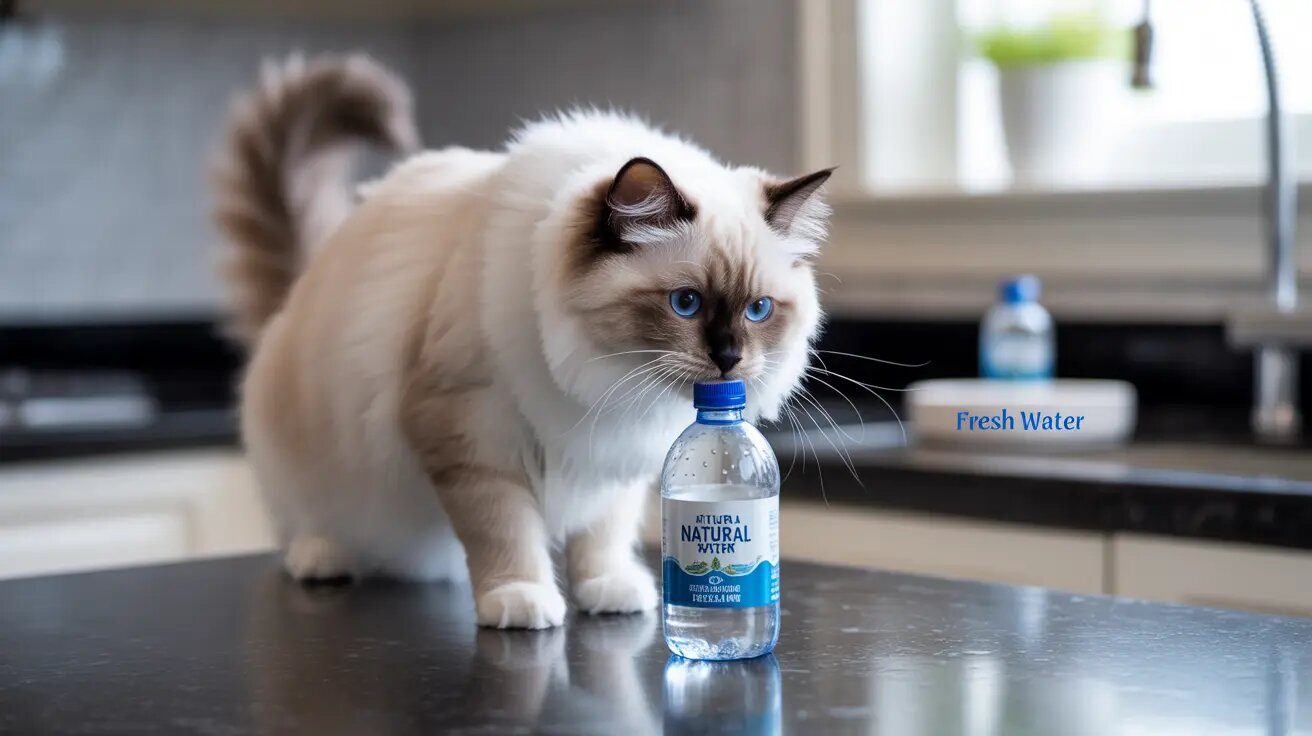
Many cat owners think about bottled water for cats as an alternative to tap water — especially if their tap tastes bad, is hard, or causes digestive issues. While bottled water can be safe and even helpful in some situations, cats have specific hydration needs that go beyond just “any water will do.” Understanding the benefits, limitations, and best practices helps you make the healthiest choice for your feline companion.
Hydration plays a major role in a cat’s urinary and kidney health, digestion, and overall wellbeing. Since cats evolved from desert-dwelling ancestors, they tend to drink less water than other animals. That makes water quality and availability especially important.
Why Hydration Matters for Cats
Cats naturally have a low thirst drive compared to many other animals. In the wild, they get most of their moisture from prey, so they aren’t prone to drink large amounts of water. Domestic cats, especially those on dry food diets, need access to fresh water to prevent dehydration and help support urinary function.
Dehydration increases the risk of concentrated urine, which can lead to crystals, urinary tract issues, and even kidney disease. Choosing the right water — whether tap, filtered, or bottled — can make a difference in encouraging regular sipping throughout the day.
Benefits of Bottled Water for Cats
Bottled water can offer a few advantages in situations where tap water may not be ideal:
Consistent Quality: High-quality bottled water often comes from reliable sources, which means fewer impurities, heavy metals, or chemical additives that some cats might react to.
Taste Preferences: Some cats are picky about water flavor and may prefer the taste of bottled water. A subtle difference in mineral content can make bottled water more appealing.
Travel and Temporary Use: When you travel or your cat is in a new environment, bottled water can be a safe, predictable option, especially if you’re unsure about local tap water quality.
That said, it’s not a requirement for most cats. Tap water is generally safe in many areas, and filtered water (via a home filter) may be a perfectly acceptable choice.
Are There Downsides to Bottled Water?
While bottled water can be safe, it also comes with considerations:
Inconsistent Mineral Content: Some bottled waters have very low mineral content (e.g., reverse osmosis water), which isn’t necessarily harmful, but it’s different from what your tap water might provide. Cats don’t require specialized formulations, but drastic mineral differences over time could influence taste preference.
Environmental and Cost Concerns: Regularly buying bottled water increases plastic waste and household costs. Many owners find that filtered tap water or a pet water fountain provides a similar benefit without ongoing expense or environmental impact.
False Sense of Security: Bottled water doesn’t guarantee safety if the source isn’t clearly labeled or if it has been improperly stored. Always check the label and ensure proper storage so it doesn’t become stale or contaminated.
Tap Water vs. Bottled Water: What’s Best?
For many cats, high-quality tap water is sufficient — especially if you use a home filter to reduce chlorine, heavy metals, and other contaminants. A few simple practices improve water quality for pets:
-
Change water daily
-
Wash water bowls regularly
-
Consider a pet water fountain to encourage sipping
Cat water fountains can be particularly effective because the movement keeps water fresh and attracts many cats who prefer running water. This can be just as beneficial as switching to bottled water, without the expense or waste.
When Bottled Water May Be Helpful
There are a few situations where bottled water might be especially appropriate for your cat:
Travel or Temporary Disruptions: If you’re visiting a place with questionable tap water or your usual water supply is interrupted, bottled water offers peace of mind.
Sensitive Stomachs: Some cats with very sensitive digestion react to changes in water chemistry. In such cases, a consistent source like bottled water can help maintain stability, at least temporarily.
Veterinary Recommendations: If your veterinarian suggests a specific type of water due to a medical condition (e.g., kidney concerns or certain dietary management plans), follow that guidance. Always check with your vet before making long-term changes based purely on preference.
In these cases, read the bottled water label and choose a product with balanced mineral levels rather than extremely soft or ultra-distilled water — unless directed otherwise by your vet.
Tips to Encourage Cats to Drink More Water
Whether you choose bottled, filtered, or tap water, encouraging your cat to drink often supports their health. Here are some helpful tips:
Make water accessible in multiple locations.
Add water to wet food to boost overall intake.
Try different bowl materials (ceramic, glass, stainless steel) since texture and smell affect preference.
Use a water fountain — many cats find moving water irresistible.
Cats are individuals, and what works for one may not work for another. Observe your cat’s drinking habits and adjust based on their comfort and health needs.
Pet Safety and Water Quality Monitoring
Even the best-quality water will only benefit your cat if the bowl and surrounding area are clean. Slimy bowls or leftover food bits can attract bacteria. Daily cleaning makes water more palatable and hygienic.
If your cat suddenly drinks much more or less water than usual, or if you notice changes in urination, appetite, or behavior, consult your veterinarian. Changes in drinking habits can be early signs of health issues, including diabetes or kidney concerns.
Balanced advice and resources from Pets Care emphasize that hydration needs and preferences vary with age, diet (wet vs. dry food), activity level, and underlying health.
Frequently Asked Questions (FAQs)
Q: Is bottled water better than tap water for my cat?
Bottled water isn’t inherently better, but it can be a good option when tap water quality is questionable or when your cat prefers the taste. Filtered water at home is often a good alternative.
Q: Can drinking only bottled water cause health problems?
Generally no, as long as it’s clean and safe. Avoid extremely soft or highly purified water over long periods unless advised by your vet, as unusual mineral profiles could affect taste or balance.
Q: Why does my cat prefer running water?
Cats are attracted to moving water because it’s instinctively associated with freshness. Water fountains mimic that effect and often encourage more drinking.
Q: Should I mix water into my cat’s food?
Yes — adding water to wet or dry food can help increase overall hydration, especially in cats that drink sparingly.
Q: When should I consult a vet about my cat’s drinking habits?
If your cat suddenly drinks a lot more or less than usual, and this is accompanied by other symptoms like lethargy, weight changes, or urination changes, seek veterinary advice.