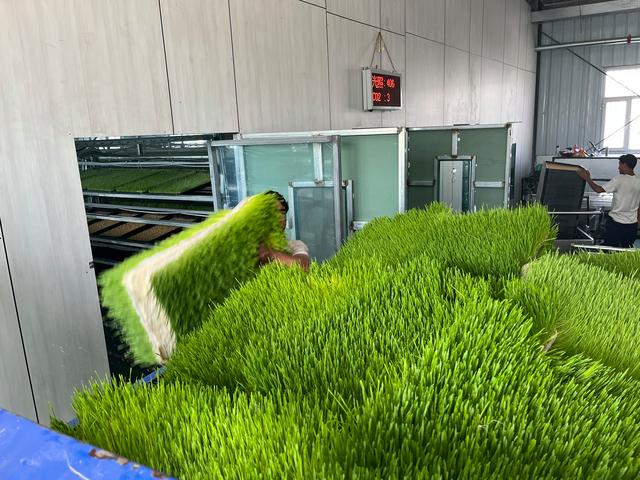
In the rolling meadows of traditional pasturelands, the rhythm of ruminants chewing through dry hay or grazing on seasonal forage has remained unchanged for centuries. Yet as agriculture confronts the twin pressures of environmental constraint and intensifying demand, a quiet revolution is beginning to reshape what—and how—our livestock eat. One of the boldest new offerings in this shift is hydroponic barley fodder: a crop that grows without soil, matures in just a few days, and offers a potential alternative to conventional feed under controlled indoor systems.
But the pivotal question, and perhaps the only one that truly matters to ranchers and dairy operators, is: Will the animals eat it? That is, is hydroponically grown barley fodder genuinely palatable to cattle and sheep—not merely accepted in trial settings, but consumed with the same enthusiasm and nutritional benefit as their more traditional feed?
In addressing this question, one must move beyond simplistic feed conversion ratios or laboratory digestibility scores. Palatability is an intricate concept—one that fuses animal psychology, physiology, taste sensitivity, familiarity, and environmental feedback loops. This article explores, in depth, the reality of hydroponic barley fodder’s palatability for cows and sheep, drawing on field experience, academic studies, and the often-overlooked behavioral nuances that drive ruminant feed preferences.
The Promise of Green, Fresh Fodder—Even in a Drought
At first glance, hydroponic barley fodder (HBF) seems almost too good to be true. Grown from grain in modular trays, often in automated, climate-controlled chambers, it reaches harvest readiness in 6 to 8 days without the use of soil or chemical fertilizers. The result is a lush mat of sprouted barley—root mass, stem, and shoot—that resembles the vibrant turf of a golf course more than a traditional feedlot.
It offers water savings of up to 90% compared to irrigated pasture, requires only a fraction of the land area, and can be produced year-round in virtually any climate. These factors are especially appealing in regions plagued by water scarcity, degraded soils, or extreme seasonal fluctuations in forage quality.
And yet, no matter how efficient the system may be, it lives or dies by one fundamental criterion: whether the animals want to eat it.
Palatability: A Complex Interplay, Not a Yes or No
When discussing the palatability of HBF, the temptation is to reduce the matter to a binary: do cattle and sheep accept the feed or reject it? But the reality is more layered.
Palatability involves sensory appeal (smell, texture, flavor), digestibility cues, learned behavior, rumen fermentation feedback, and even social signaling within a herd. Animals may “try” a new feed item, but if it produces unfamiliar digestive feedback or fails to satisfy their nutrient cravings, they will gradually reduce intake—even if it looks and smells fresh.
Researchers have long known that cattle and sheep develop feed preferences not only through instinct but also through post-ingestive feedback: the way their bodies feel after digesting a certain food. If HBF leads to stable, positive rumen fermentation and energy availability, animals tend to return to it. If it causes gassiness, shifts in gut motility, or merely lacks certain desirable compounds, they may become more hesitant.
In studies conducted across Australia, Kenya, India, and the United States, cattle and sheep have shown initial curiosity when introduced to hydroponic barley. Some herds have taken to it rapidly, especially when mixed with other known rations. Others, particularly those used to fibrous dry matter or coarser grasses, have shown slower adaptation. This disparity is not failure; it reflects the sensory memory and dietary imprinting that varies by environment and history.
Texture, Moisture, and the ‘Mouthfeel’ Factor
A critical dimension of palatability is texture—an often underestimated component of feed design. For ruminants, the “chewability” of feed matters greatly. Too fibrous, and the animals may tire; too soft or slimy, and it may trigger aversion.
Hydroponic barley fodder falls somewhere in between. It has a soft, pliable shoot structure that contrasts with the scratchy stems of hay or silage. The root mat, which is often served intact, adds a denser, interwoven texture that some cattle enthusiastically chew through, while others nudge aside or ignore.
One notable observation from ranchers is that younger livestock adapt more readily to HBF, possibly because they have less entrenched feed habits. Lambs and calves, in particular, seem to approach HBF with curiosity rather than suspicion. For mature animals, however, the transition period becomes critical. Those who associate feed with certain tactile cues—like the crunch of dry fodder or the density of silage—may need several days or even weeks to reorient their acceptance behavior.
The Role of Smell and Familiarity
While humans rely on sight and taste, livestock depend heavily on smell to evaluate feed. Hydroponic barley has a mild, grassy aroma, somewhat sweeter than conventional forage but less fermented than silage. It lacks the pungency of alfalfa or the earthy sharpness of dry hay.
This can be a double-edged sword. In clean environments with limited feed competition, animals may find the aroma pleasant and explore the feed willingly. But in field conditions where other, more aromatic options exist, HBF might register as “neutral” rather than “attractive.”
Many producers report that gradual introduction—where HBF is mixed with more familiar feed over 5–10 days—produces dramatically better outcomes. Cattle and sheep begin to associate the new smell and texture with positive digestive outcomes, reinforcing their willingness to consume more.
Familiarity doesn’t just breed acceptance; it enables learned preference. Just as humans can develop a taste for sushi or strong cheeses, ruminants can be trained into novel feed habits. But that process requires consistent exposure, predictable availability, and minimal competition.
Digestibility and Post-Ingestive Feedback
If the animals eat the feed once but avoid it later, palatability is not the issue—digestive response is.
Hydroponic barley has a highly digestible profile, with dry matter digestibility often exceeding 80%. Its water content, however, is much higher than traditional feed, often ranging from 80% to 90%. This can make it seem “light” in terms of bulk dry matter intake, and unless supplemented properly, animals may not meet their energy needs.
Ruminants quickly detect when a feed item isn’t delivering on satiety or rumen stability. In some trials, animals gorged on HBF the first day, only to reduce intake slightly after fermentation patterns shifted.
This is not a flaw of palatability per se—it is a reminder that palatability is inseparable from functionality. Feed that tastes good but produces bloating, loose stools, or rumen instability is swiftly abandoned. HBF’s high moisture content may dilute rumen acidity beneficially, but if it displaces other sources of fiber too aggressively, it can also impair chewing efficiency and microbial balance.
Rancher Perspectives: Anecdotes and Adjustments
Stories from the field often provide a more nuanced picture than lab data. In Idaho, a small dairy farmer using a container-based hydroponic system observed that his Jersey cows began to “wait” at the feeding gate once they heard the HBF trays being wheeled out. He reported increased feed enthusiasm—but only after he learned to slice the mats into narrow strips, making them easier to pull apart and chew.
In contrast, a sheep operation in South Africa initially struggled with acceptance. The sheep ignored the mats unless mixed with lucerne (alfalfa), but after two weeks, and once water access was increased to balance the moisture load, the animals began to show clear preference.
These anecdotes reinforce an essential truth: palatability is not a static quality of the feed but a dynamic interaction with environment, expectation, and presentation. How HBF is chopped, served, hydrated, or even laid out affects how willing cattle or sheep are to consume it consistently.
Environmental and Seasonal Factors
Palatability is rarely consistent across seasons. In hot climates, the cool, moist texture of hydroponic barley may be more appealing than dry, dusty hay. In winter, however, when animals seek energy-dense options to maintain body heat, the high-water-content HBF might seem insufficient unless paired with grain or oilseed supplements.
In drought-prone areas, the mere availability of green feed can spike interest—even if it is novel. But in lush pasture seasons, when multiple aromatic forages are available, HBF must “compete” for attention. This underscores why HBF is best viewed as a consistent base feed rather than a complete replacement. When introduced with strategic timing and in balance with other dietary needs, its palatability improves dramatically.
Conclusion: A Feed With Promise, If Understood and Managed Well
Hydroponic barley fodder is not a magic bullet, nor is it a universal feed that instantly delights every animal. But it holds remarkable potential as a palatable, sustainable, and flexible feed option—if producers understand how palatability is developed, not given.
For cattle and sheep, palatability is not about novelty—it’s about trust. That trust builds gradually through consistent exposure, careful mixing, optimal moisture balance, and intelligent presentation. And when that trust is established, the visual delight of cows trotting to feed on emerald mats of barley sprouts becomes more than just a novel image. It becomes a new agricultural rhythm.
One where soilless farming meets behavioral science, and where palatability isn’t a barrier—but a bridge.