Crawl space insulation plays a critical role in moisture control and long-term property health. For homeowners and commercial property owners alike, protecting structural components from water-related deterioration starts with addressing insulation gaps in below-grade areas. Moisture damage not only compromises comfort but can also lead to rot, pest intrusion, and lower energy efficiency.
This guide explains how professional crawl space insulation solutions—particularly spray foam—help prevent moisture problems in crawl spaces and why this protection is foundational for building performance.
Why Moisture Accumulates in Crawl Spaces
Crawl spaces are highly prone to humidity and water intrusion. These areas are naturally cooler and typically located beneath conditioned living zones, which creates thermal imbalances that invite condensation.
Key Factors That Increase Moisture Risk
- Soil Vapor Transmission Water vapor rises from the soil, especially in vented crawl spaces. Without a vapor barrier or sealed insulation, this vapor collects on wood and ductwork surfaces.
- Outdoor Air Infiltration Vents and air gaps allow humid outdoor air into the crawl space, which condenses on cool surfaces, particularly during seasonal temperature shifts.
- Plumbing and Drainage Leaks Minor leaks from pipes, appliances, or poor exterior drainage can introduce moisture over time.
- Poor Air Sealing Gaps in the foundation, sill plate, or rim joists let unconditioned air flow in, driving up humidity and introducing contaminants.
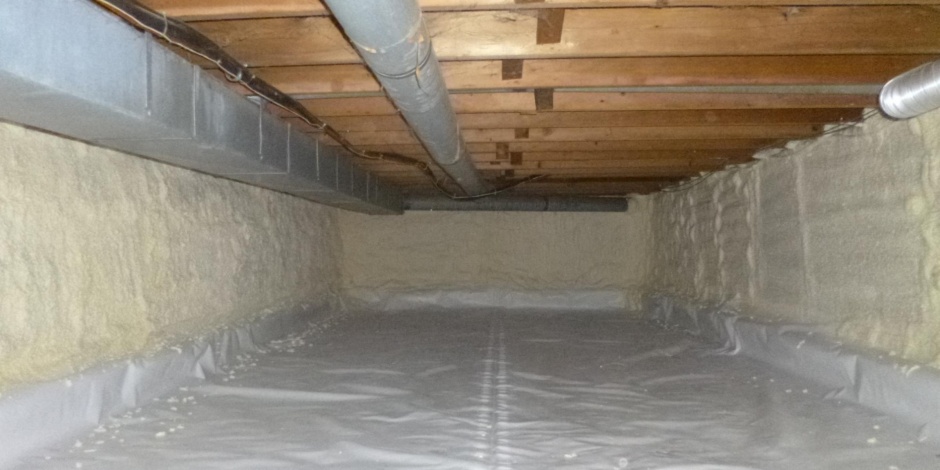
How Crawl Space Insulation Controls Moisture
Insulating the crawl space limits air exchange, seals off vapor pathways, and creates a thermal barrier that prevents condensation and mold growth.
Spray Foam Seals Air and Moisture Entry Points
Closed-cell spray foam insulation forms a dense, water-resistant layer that fills gaps and cracks in crawl space walls and ceilings. It blocks air leakage at the rim joist, sill plate, and vent penetrations while resisting vapor movement.
- Reduces air infiltration by up to 90%
- Provides both thermal and vapor resistance
- Conforms tightly to irregular surfaces and corners
Prevents Condensation on Ducts and Surfaces
Insulation stabilizes temperature in the crawl space, preventing warm interior air from hitting cold surfaces. This reduces dew point contact and moisture accumulation on ducts, pipes, and floor systems.
- Maintains consistent ambient temperature
- Reduces surface-level humidity spikes
- Improves HVAC system lifespan by limiting rust and corrosion
Isolates the Home from Ground Moisture
Insulated crawl spaces with vapor barriers and sealed perimeters prevent soil moisture from rising into structural materials.
- Blocks vapor diffusion from the ground
- Limits wood rot, fungal growth, and insulation breakdown
- Maintains dry conditions for storage and mechanical systems

Vented vs. Unvented Crawl Spaces: Impact on Moisture
How a crawl space is configured—vented or unvented—affects how insulation should be installed to control moisture effectively.
|
Feature |
Vented Crawl Space |
Unvented Crawl Space |
|---|---|---|
|
Air Movement |
Outdoor air enters via vents |
Air movement sealed off |
|
Moisture Risk |
High due to humidity and temperature swings |
Lower with proper air/vapor control |
|
Insulation Strategy |
Floor insulation; may include vapor barrier |
Wall insulation with full encapsulation |
|
Spray Foam Recommendation |
Closed-cell foam for floor and joists |
Closed-cell foam for walls and rim joists |
|
HVAC Interaction |
Often disconnected from conditioned air |
May include supply air for regulation |
When Vented Spaces Become Problematic
In climates with high humidity or cold winters, vented crawl spaces are more likely to experience condensation and mold. Retrofitting with spray foam insulation and sealing off vents can convert the space into a controlled, unvented zone.
Benefits Beyond Moisture Protection
Insulating the crawl space not only prevents moisture-related issues but improves the building’s overall performance in several ways.
Energy Efficiency Gains
Sealing and insulating the crawl space reduces heating and cooling loads. This stabilizes indoor temperature and reduces energy waste caused by unconditioned air exchange.
- Lower HVAC runtime
- Balanced indoor temperatures
- Reduced heat loss through floor systems
Improved Indoor Air Quality
Contaminants like mold spores, dust, and radon can infiltrate living areas through unsealed crawl spaces. Air-sealing insulation acts as a barrier between the crawl space and interior air.
- Blocks allergens and particulates
- Reduces mold growth
- Isolates musty odors from conditioned areas
Structural Longevity
Moisture causes gradual degradation of framing, insulation, and subfloor materials. Insulated crawl spaces stay dry, preserving material integrity.
- Protects wood framing and flooring
- Prevents rust on metal components
- Reduces maintenance and repair cycles

Choosing the Right Insulation for Crawl Spaces
Closed-cell spray foam is often preferred due to its high R-value and resistance to both air and moisture. However, the best solution depends on the existing crawl space configuration and regional climate.
Closed-Cell Spray Foam
- High moisture resistance
- Adds structural rigidity
- Ideal for walls, rim joists, and tight spaces
Rigid Foam Board
- Used in combination with vapor barriers
- Effective for vertical wall applications
- Requires precise sealing around edges
Fiberglass or Batt Insulation (Less Common)
- Susceptible to moisture retention
- Often underperforms in vented crawl spaces
- Typically replaced during retrofit upgrades
Conclusion
Crawl space insulation is a key defense against moisture damage, mold growth, and structural deterioration. Whether in a residential or commercial setting, insulating with closed-cell spray foam provides a comprehensive barrier against air infiltration and vapor intrusion. It not only keeps crawl spaces dry but enhances overall building health, comfort, and energy efficiency.
Choosing the best spray foam insulation contractor depends on the crawl space configuration and climate. Spray foam remains the most reliable option for moisture-prone regions, offering both thermal and air-sealing performance in a single application.
FAQs
How does spray foam compare to fiberglass in crawl spaces? Spray foam offers a superior air and moisture seal compared to fiberglass. Fiberglass can trap moisture and lose R-value when wet, while spray foam remains stable and resistant to humidity.
Can I insulate my crawl space without encapsulating it? Partial insulation may help, but encapsulation provides the most complete protection. Insulating without sealing off vents or adding vapor barriers may still allow moisture intrusion.
Is spray foam safe to use around electrical wiring and pipes? Yes, closed-cell spray foam can be safely applied around wiring and plumbing. It conforms to these features without causing damage or requiring special shielding.
What’s the difference between open-cell and closed-cell foam in crawl spaces? Closed-cell foam is denser and resists water, making it suitable for damp environments. Open-cell foam is less resistant to moisture and is better suited for dry, interior spaces.
Does insulating the crawl space reduce pests or rodents? Yes, sealing air gaps and insulating with foam helps block common entry points for pests. It also removes the damp environment that attracts insects and rodents.
Author: Daniel Walker, owner of Colony Insulation and Spray Foam Magazine’s 2024 Contractor of the Year, leads with over two decades of experience in the insulation industry. Passionate about energy efficiency and customer satisfaction, Daniel is dedicated to delivering high-performance insulation solutions across Michigan with precision and care.
Reviewer: Jennifer Morales, a seasoned insulation consultant with over 8 years of industry experience, specializes in residential and commercial energy solutions. Known for her practical insights and quality-first approach, Jennifer ensures all content reflects real-world expertise and up-to-date best practices.