In every industrial plant, people talk a lot about automation, speed, and efficiency. But when you break things down, most operations still rely on something very simple: controlled airflow. Pneumatic systems run on air, and that air needs direction. That’s where the directional control valve steps in. This single component decides how a machine moves, when it moves, and how smoothly it completes every cycle.
I’ve seen many plants upgrade machines, buy fancy actuators, add sensors but still struggle because their airflow stays messy. Once they focus on the valve at the center of the whole setup, everything else starts working better. That’s why many engineers call these valves the “heart” of the system. And honestly, the description fits perfectly.
Why Directional Control Valves Matter So Much
When compressed air enters a system, it carries power. But this power stays useless unless something guides it. A directional control valve guides air to the right place. It shifts airflow between ports, opens paths, closes others, and keeps cylinders moving exactly as they should.
Without the valve, actuators freeze. Cylinders stall halfway. Machines lose rhythm. And the whole automation line gets shaky. I’ve walked through many workshops where a small valve issue created massive downtime. Most managers underestimate the impact until the system literally stops.
A good directional control valve keeps everything steady. It delivers quick switching, consistent pressure, and accurate motion control. And that’s exactly what modern manufacturing needs.
How a Directional Control Valve Really Works
Let me explain this in a simple way. Imagine a valve like a traffic cop standing in the middle of a busy street. The cop points one side and stops the other. Then switches directions again. Everything flows, but only with proper guidance.
Inside the valve, the spool does the same job. It shifts when you trigger it, and it opens and closes the air passages. One position sends air into your cylinder. Another position sends air out. A third position might hold the air.
No fancy theory. Just smart, controlled movement.
Because when airflow behaves properly, machines behave properly.
Types of Directional Control Valves in Modern Plants
Different plants need different levels of control. You’ll see all kinds of valves in the market, each serving a specific purpose.
2-Way or 3-Way Valves
These handle simple operations. Think of blow-off units, basic actuators, or simple on/off tasks.
4-Way or 5-Way Valves
These run double-acting cylinders, robotic grippers, or anything that needs push-pull movement. That’s where most automation lines rely heavily on them.
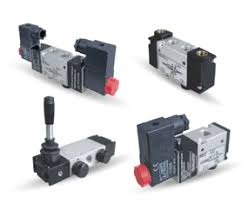
Manual, Mechanical, Pneumatic, or Electrical Valves
Some systems need push buttons. Some rely on limit switches. Most modern lines prefer solenoid-based valves for quick response and programmable control.
The type doesn’t matter as much as choosing the right one for your machine. That’s where many mistakes happen.
Where Industries Use Directional Control Valves
The real strength of these valves becomes visible when you walk through different factories. Almost every machine uses them somewhere. Let me take you through the most common applications.
1. Assembly Line Automation
Assembly machines love precision. One part needs to move forward, another part needs to clamp, and the next part needs to lift. Everything must stay perfectly in sync.
Directional control valves manage this choreography. They run cylinders, grippers, press units, and indexing tables. If something starts lagging, you’ll usually find a sticky valve or a worn spool behind the issue.
2. Packaging Machinery
Packaging lines move fast. Really fast. A small delay can throw off the whole timing.
Valves here control sealing jaws, pick-and-place heads, film tension units, and conveyor diverters. Good valves reduce air leaks, cut operating costs, and keep each cycle crisp.
3. Material Handling Systems
Lift tables, pallet loaders, drum tilters, and conveyors depend on smooth cylinder movement. Operators want predictable motion. No jerks. No pressure drops.
A high-quality valve keeps every lift and shift controlled and steady.
4. Food and Pharma Machinery
Cleanliness is a priority here. And that puts big responsibility on valves. They must run without contamination risks, without oil carryover, and without sudden failures.
Hygienic pneumatic setups rely heavily on stable, precise valves.
5. Robotic and High-Speed Automation
Robotic grippers and pneumatic arms need lightning-fast switching. A slow valve ruins the whole motion.
Many factories now upgrade old valves to faster-response solenoid valves to increase speed without replacing entire machines.
Highlighting the Keyword Naturally
When you work with a directional control valve, you don’t just route air: you control the whole pace of the system. These valves set the movement, timing, and accuracy of every pneumatic operation. Without the right valve, automation turns inconsistent, slow, and energy-hungry. The reliability of the directional control valve directly impacts the machine’s performance. In short, the valve drives everything else.
The Role of Quality and Manufacturing Standards
Quality makes a huge difference. A cheap valve might work at first, but once the spool starts wearing out or the body begins leaking, your machine performance drops. I’ve seen valves that run fine for a month and then lose their efficiency. The air cost alone becomes painful for the maintenance team.
Companies like Airmax Pneumatics build valves that last longer under heavy cycles. Plants trust them because a stable valve reduces downtime and keeps energy usage under control.
Quality isn’t a luxury anymore. It’s necessary. And it pays off in every shift.
What to Consider When Choosing a Directional Control Valve
Engineers often pick valves based on price or availability. But a few practical checks can save a lot of trouble later.
1. Airflow Requirement
Bigger cylinders need higher flow. Small valves choke the speed.
2. Actuator Type
Single-acting and double-acting cylinders need different port setups.
3. Duty Cycle
Frequent cycling demands stronger valves with better sealing.
4. Operating Environment
Dust, chemicals, heat, moisture-environmental conditions matter. They influence material choice and valve longevity.
5. Control Method
Manual, solenoid, pneumatic, or mechanical; pick one based on how your machine triggers movement.
A bit of careful selection can improve efficiency, reduce air consumption, and increase machine life.
Why These Valves Deserve the “Heart” Title
If air is the life of a pneumatic system, the valve decides how that life moves. Every cylinder stroke, every actuator shift, and every automated motion starts with a valve decision.
A failing valve feels like a weak heartbeat; everything slows, hesitates, or stops.
A strong valve keeps the system alive, steady, and ready for long shifts.
That’s why industries respect them so much. Behind every smooth pneumatic operation, a valve keeps working nonstop.
Conclusion
Directional control valves keep modern pneumatic systems running with precision and reliability. They guide airflow, maintain timing, and ensure every part of the machine completes its job correctly. From assembly lines to robotics and heavy material handling, these valves support almost every movement in industrial automation.
Choosing the right directional control valve brings stability, lower energy use, and longer machine life. And as industries continue pushing for efficient and faster automation, these valves will remain at the core of every pneumatic setup, quietly doing the heavy lifting.