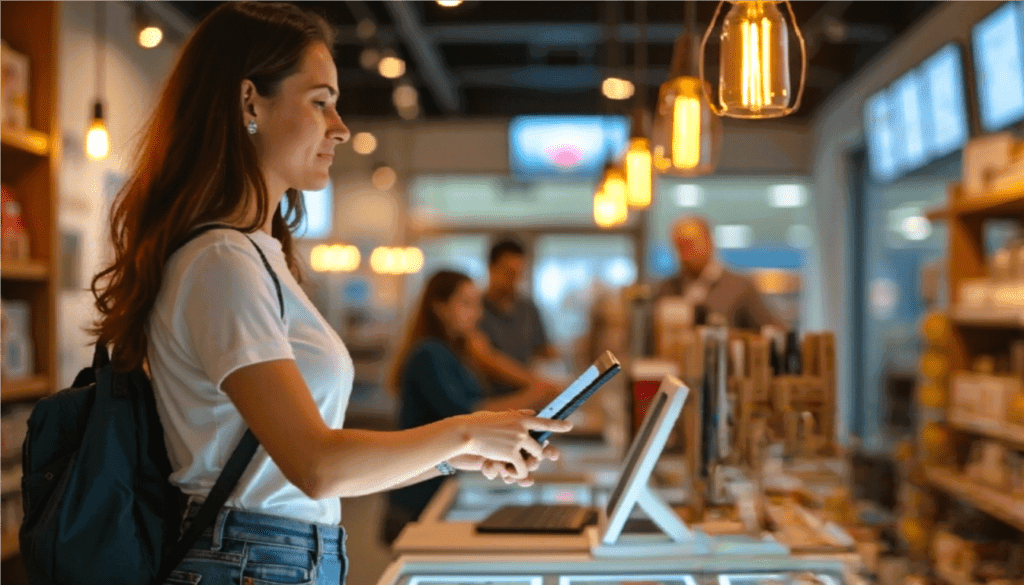
If you’ve ever paid for a coffee and noticed a screen at the counter suggesting a pastry, or seen a checkout display highlighting a special deal, you’ve encountered digital point of sale (POS) merchandising in action. For businesses, this isn’t just a clever way to sell more—it’s a strategic tool that turns the checkout into one of the most valuable moments in the customer journey.
Digital POS merchandising combines software, screens, and data-driven insights to influence customer decisions right at the point of purchase. Unlike traditional static displays, digital merchandising is dynamic, adaptable, and measurable. It’s no longer just a nice-to-have; it’s an essential tool for businesses that want to maximize sales, improve customer experience, and stay competitive.
What Is Digital POS Merchandising?
At its simplest, digital POS merchandising refers to any digital content, prompts, or suggestions presented to customers during the checkout process to encourage additional purchases, highlight promotions, or reinforce brand value.
It goes beyond traditional merchandising, which relies on printed signs, posters, or physical displays. With digital POS merchandising, content can rotate, adapt, and respond to real-time data. For example, a tablet at the checkout can suggest a high-margin add-on item, a digital menu board can highlight a seasonal promotion, or the POS screen can display loyalty rewards or upsell prompts tailored to the customer.
Key Tools Behind Digital POS Merchandising
A modern digital POS merchandising setup often combines several components:
- POS Software: At the heart of the system, the software tracks transactions, inventory, and customer data. It also serves as the engine for triggering merchandising prompts.
- Digital Screens: These can be positioned near the register, integrated into self-checkout kiosks, or embedded within the POS interface itself. Screens display dynamic content like promotions, upsells, or cross-sells.
- Payment Integration: Because POS systems handle payments, merchandising can be seamlessly integrated into the checkout workflow. Customers can add suggested items with a simple tap or button press.
- Analytics And Reporting: One of the biggest advantages of digital merchandising is the ability to measure effectiveness. POS systems can track which prompts succeed, how often items are added, and how promotions impact sales.
These tools work together to create a system that’s flexible, data-driven, and responsive to the business’s needs.
Tactics That Make Digital POS Merchandising Effective
The power of digital POS merchandising isn’t just in the tools—it’s in how businesses use them. Here are some of the most common and effective tactics:
- Upselling And Cross-Selling: Suggesting related products or higher-value options at checkout. For example, offering a gourmet muffin with a coffee order or an extended warranty with an electronics purchase.
- Time-Based Promotions: Adjusting content based on the time of day, season, or inventory. A café might promote breakfast items in the morning and lunch specials in the afternoon.
- Loyalty And Rewards Reminders: Displaying points earned, upcoming rewards, or exclusive offers to encourage repeat business.
- Dynamic Product Highlighting: Featuring items that are overstocked, seasonal, or high-margin, based on real-time data from the inventory system.
The key is relevance. Prompts should feel helpful rather than intrusive, guiding customers toward choices they are likely to appreciate.
Real-World Use Cases
Digital POS merchandising is versatile and can be applied across industries.
Retail: Clothing stores can use digital prompts to suggest accessories, shoes, or complementary pieces that complete an outfit. Electronics stores can highlight bundles or add-on services at checkout.
Food Service: Cafés, restaurants, and fast-food chains frequently use POS merchandising to promote combos, upsells, or limited-time offers. Digital menu boards can change automatically depending on the time of day, while checkout screens encourage add-ons.
Service-Based Businesses: Salons, gyms, and fitness studios can promote packages, memberships, or retail products during payment. For example, a salon might suggest haircare products that match a customer’s recent service.
Small Businesses: Even with limited budgets, small businesses can leverage digital POS merchandising to appear more professional and increase average order value. Tablet-based prompts or simple screens at checkout can make a big impact without a large investment.
Why Businesses Are Shifting From Static To Digital Merchandising
The shift from printed signs and static displays to digital POS merchandising isn’t just a trend—it’s a response to customer expectations and operational benefits.
- Relevance And Timeliness: Digital content can be updated instantly, ensuring promotions, pricing, and messaging are accurate.
- Measurable Results: Businesses can track how many customers accept upsells or promotions, which items perform best, and how merchandising impacts overall revenue.
- Flexibility: Digital merchandising adapts to inventory, seasonality, or changing business goals.
- Enhanced Customer Experience: Instead of feeling pushed or overwhelmed, customers receive helpful suggestions that simplify decision-making.
Best Practices For Digital POS Merchandising
To maximize results, businesses should approach digital POS merchandising thoughtfully:
- Keep It Simple And Clear. Too many prompts can confuse or overwhelm customers.
- Focus On Relevant Suggestions. Use data from past sales, inventory, or customer behavior to tailor prompts.
- Monitor And Analyze Performance. Use analytics to see what works and adjust messaging accordingly.
- Maintain Brand Consistency. Digital screens should feel like an extension of the business, not a distracting advertisement.
By combining these practices with the right technology, businesses can create a checkout experience that is both efficient and persuasive.
The Future Of Digital POS Merchandising
As technology evolves, digital POS merchandising is likely to become even more sophisticated. Integration with AI could allow systems to predict customer preferences and present ultra-personalized suggestions. Self-checkout kiosks and mobile POS devices will make dynamic merchandising accessible even for small and mobile businesses.
The checkout, once a simple endpoint of the shopping journey, is now a strategic touchpoint. Digital POS merchandising ensures that every transaction can be maximized, analyzed, and optimized, all while enhancing the customer experience.
For any business looking to grow smarter—not just bigger—digital POS merchandising is no longer optional. It’s a tool that transforms ordinary checkout moments into meaningful, revenue-driving opportunities.