Building a barndominium means making dozens of early choices that affect long-term comfort, utility costs, and property value. One of the most overlooked decisions during early planning is insulation. Yet, insulation type, placement, and installation timing impact energy efficiency, structural integrity, and indoor comfort more than many other design elements.
If you’re in the early stages of planning a barndominium, understanding your insulation options—and acting early—can prevent retrofit problems later.
Why Insulation Should Be One of Your First Decisions
Waiting too long to choose your insulation method creates design conflicts later—especially in metal-framed structures like barndominium. The insulation type influences framing, electrical routing, HVAC design, and wall assemblies. By prioritizing this decision early, you prevent costly workarounds.

Insulation Choices Affect Every Part of the Build
Barndominium aren’t built like traditional stick-frame homes. They often use steel frames, open truss ceilings, and large open spaces. These factors make insulation more complex.
- The framing doesn’t support traditional batt insulation easily
- Thermal bridging is common in metal buildings without spray foam
- Large open interiors increase the need for consistent envelope sealing
Building Code Compliance Depends on Insulation Ratings
Most counties require minimum R-values for energy code compliance. Not all insulation types meet these requirements without added layers or installation techniques. Selecting an insulation contractor early ensures you meet building code expectations without redesign.
Common Barndominium Insulation Options
Each insulation method has tradeoffs. While many options are available, not all perform equally well in a metal structure. Here’s what you need to know.
Spray Foam Insulation
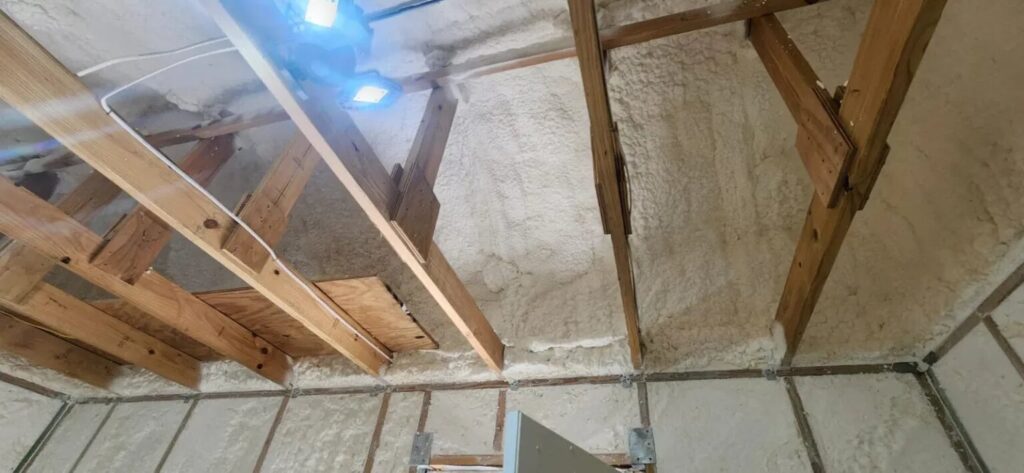
Spray foam—particularly closed cell—is often the top choice for barndominium due to its moisture resistance and structural benefits.
- Creates an air and vapor barrier in one application
- Adheres to steel framing without gaps
- Strengthens wall and roof panels under stress
- Higher initial cost but lower lifetime energy use
Batt and Blanket Insulation
Traditional fiberglass batt insulation is used in wood-frame homes but requires framing retrofits in steel structures.
- Cheaper upfront
- Prone to moisture retention and mold in metal buildings
- Needs vapor barrier and perfect installation to avoid air leaks
Rigid Foam Board
Foam board insulation can be used inside wall panels or under roofing systems.
- Effective R-values in thin layers
- Must be taped and sealed to prevent air leaks
- Labor-intensive and less flexible during framing
Reflective or Radiant Barrier Insulation
Radiant barriers reflect heat rather than absorb it. Often used in hot climates alongside other insulation methods.
- Not a standalone insulation solution
- Reduces heat transfer from sun-exposed roofs
- Useful in attics or unconditioned spaces
Spray Foam vs. Batt Insulation: Comparison Table
|
Feature |
Spray Foam (Closed Cell) |
Fiberglass Batt |
|---|---|---|
|
Air Barrier |
Yes |
No |
|
Moisture Resistance |
High |
Low |
|
Installation Complexity |
Professional Required |
DIY Possible |
|
Structural Support |
Adds Rigidity |
None |
|
Compatibility with Steel |
Excellent |
Needs Framing Adjustments |
|
Long-term Energy Efficiency |
High |
Moderate |
|
Cost |
Higher Upfront |
Lower Upfront |
How Insulation Interacts with HVAC, Framing, and Utilities
Insulation decisions change how HVAC systems are sized, how framing is designed, and where electrical and plumbing can be run. Making this choice first gives your entire build a clear foundation.
HVAC Load Calculations Depend on Insulation Type
Choosing spray foam allows HVAC designers to reduce tonnage and ductwork, which saves cost. It also stabilizes interior temperatures better than batt insulation.
Electrical and Plumbing Placement Is Affected
Spray foam insulation expands after installation, so wiring and plumbing must be carefully planned and placed. Batt insulation is more forgiving, but prone to air leaks around utilities.
Framing Details May Need Alteration
Closed cell spray foam can be applied directly to steel panels, eliminating the need for wood framing infill. Batt insulation requires full cavity framing and sometimes furring strips.

When to Install Insulation During the Build
Insulation timing matters. Missing this step during framing or roofing creates logistical problems later.
Install After Framing But Before Interior Finishes
This ensures insulation can be applied cleanly and without obstruction. Spray foam should go in after rough plumbing and electrical but before drywall or paneling.
Monitor Weather and Humidity During Application
Spray foam requires certain humidity and temperature conditions. Plan for this during seasonal construction.
Mistakes to Avoid When Choosing Barndo Insulation
Mistakes in insulation planning can cause long-term energy waste or costly repairs. Avoid these common pitfalls.
Choosing Based on Price Alone
Batt insulation may look cheaper upfront, but its lower efficiency often leads to higher monthly energy bills. In metal barndominium, spray foam often provides better ROI.
Ignoring Moisture Control
Metal buildings are prone to condensation without proper insulation. Closed cell spray foam blocks vapor migration and prevents mold risk.
Waiting Until After Build-Out
Installing insulation after drywall or paneling is up creates gaps, missed spots, and weak seals. Plan insulation into your framing layout.
Conclusion
Insulation isn’t just another line item on the barndominium checklist—it shapes every aspect of your building’s efficiency, comfort, and longevity. Metal buildings respond differently to heat, moisture, and air leaks than traditional homes. Choosing insulation early in the process gives your contractors the structure and clarity they need to plan effectively.
Spray foam—especially closed-cell—offers the most comprehensive performance for barndominiums. While the initial cost may be higher, the payoff comes in reduced utility bills, better moisture control, and fewer retrofit headaches. Starting with a comprehensive barndominium insulation plan ensures that the rest of your build can proceed with fewer compromises.
FAQs
What type of insulation works best for metal barndominiums?
Closed cell spray foam is often the most effective choice. It seals gaps, resists moisture, and adheres well to steel frames, reducing long-term air leaks and thermal bridging.
Can I install spray foam insulation myself in a barndominium?
No. Spray foam must be professionally installed. It requires specific equipment, safety precautions, and precise mixing and application to perform correctly.
How does insulation affect HVAC sizing in a barndominium?
High-performance insulation reduces HVAC load requirements. Spray foam allows HVAC systems to be smaller and more efficient, which lowers installation and operating costs.
Do I need a vapor barrier with spray foam in a barndominium?
Closed cell spray foam acts as its own vapor barrier. This eliminates the need for separate moisture layers and helps prevent condensation inside metal wall panels.
When should insulation be installed during construction?
After framing and rough-in for plumbing and electrical, but before interior finishes. This sequence ensures full coverage and prevents insulation gaps.
Author: With 15 years of banking experience and five years managing H&R Foam Insulation, Edith is passionate about building strong relationships with customers. Her favorite part of the role is connecting with clients and ensuring their needs are met as she works alongside them to improve the health, comfort, and energy efficiency of their homes.
Reviewer: With 7 years in the spray foam insulation business, Ella Adams offered useful feedback on this post, helping make sure the tips were both realistic and easy to apply.