Introduction
Choosing the right machine tools is critical for efficiency, productivity, and precision, whether you’re running a small workshop or a large industrial operation. The U.S. machine tool market is expected to grow at a CAGR of 4.7% from 2023 to 2030, reflecting increasing demand for high-precision equipment across various industries. While small workshops require versatile, space-efficient tools, large industries prioritize high-output, automated machinery. This guide explores the best machine tools for each setting, their applications, and how to maximize efficiency.
Understanding the Differences Between Small Workshops and Large Industries
1. Scale and Production Volume
- Small workshops typically focus on custom or low-volume production, requiring flexible and cost-effective machines.
- Large industries operate on mass production, demanding high-speed, high-precision, and automated machinery.
2. Space Constraints
- Small workshops have limited floor space, making compact and multifunctional tools a priority.
- Large industries operate in expansive facilities, allowing for larger, more specialized equipment.
3. Budget and Investment
- Small businesses often work with tighter budgets, requiring cost-effective solutions.
- Large industries have higher capital investments, enabling the use of high-end CNC machines and robotics.
Essential Machine Tools for Small Workshops
1. Benchtop Lathe
A benchtop lathe is an excellent choice for small workshops, offering precision machining of metal and wood. Popular models like the Grizzly G0602 provide affordability and efficiency for small-scale operations.
2. Drill Press
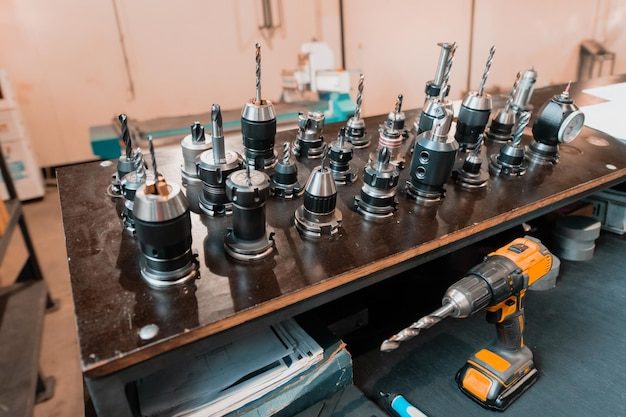
For accurate hole drilling, a drill press is a must-have. The JET JDP-17 is a great option with variable speeds and a sturdy frame, ideal for small businesses.
3. Milling Machine
A mini milling machine, such as the JET JMD-18, enables small workshops to perform detailed cutting and shaping tasks without requiring extensive space.
4. Band Saw
The WEN 3962 band saw is highly versatile, allowing workshops to cut intricate shapes in metal and wood efficiently.
5. 3-in-1 Machine (Lathe, Mill, Drill)
Space-saving multi-purpose machines like the Baileigh MLD-1030 are perfect for small workshops, combining multiple functionalities in one unit.
Best Machine Tools for Large Industries
1. CNC Machining Centers
CNC machining centers, such as the Haas VF-2, offer high-speed, high-precision production with automated controls, ideal for mass production.
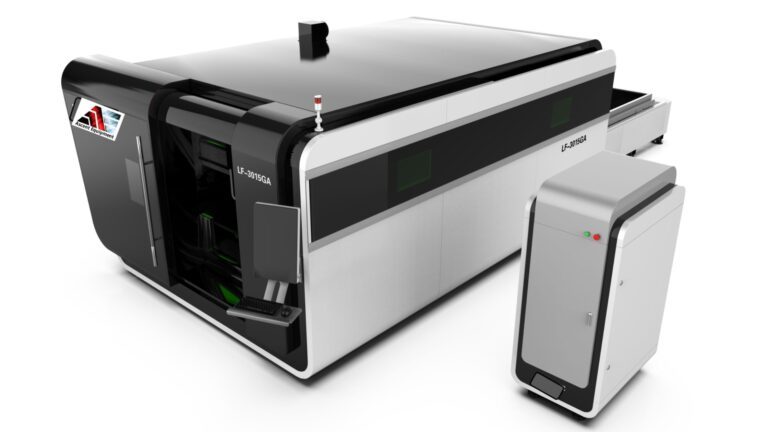
2. Industrial Laser Cutters
For precise metal cutting, industrial laser cutters like the Trumpf TruLaser 3030 provide exceptional accuracy and efficiency.
3. Hydraulic Press Brakes
Used for bending and shaping metal sheets, hydraulic press brakes like the Amada HRB Series ensure consistent and high-quality results in large-scale operations.
4. Robotic Welding Machines
Robotic welding machines such as the Fanuc ARC Mate Series increase efficiency and precision in high-volume welding applications.
5. Heavy-Duty Lathes
For large-scale turning operations, heavy-duty lathes like the Okuma LB3000 EX II deliver powerful and precise machining capabilities.
Market Trends and Statistics
- The U.S. machine tool market was valued at approximately $87.4 billion in 2022, with projections to reach $120 billion by 2030.
- CNC machine adoption is growing at a rate of 6.8% annually, driven by demand for automation and precision.
- The automotive and aerospace sectors are the largest consumers of machine tools, with an increasing shift toward smart manufacturing and IoT-integrated machinery.
Choosing the Right Machine Tools: Key Considerations
1. Budget and ROI
Small workshops should prioritize cost-effective, versatile machines, while large industries should focus on high-output, automated equipment for long-term ROI.
2. Maintenance and Durability
Investing in reliable brands with strong customer support can minimize downtime and maintenance costs.
3. Space and Scalability
Small businesses should maximize space efficiency, while large industries must plan for future expansion and automation integration.
Conclusion
Selecting the right machine tools depends on factors such as production volume, available space, and budget. While small workshops benefit from compact, multi-purpose machines, large industries require high-speed, automated solutions. By understanding these differences and industry trends, businesses can invest in the right tools to enhance productivity and stay competitive in the growing U.S. machine tool market.