Security today is no longer about locking doors and installing a few cameras in the hallway. Businesses, institutions, and even residential communities face increasingly complex security challenges. From unauthorized access and internal theft to data breaches and liability concerns, risks can emerge in ways that were almost unimaginable just a decade ago.
To address these challenges effectively, organizations are moving beyond standalone security tools. Instead of treating access control and video monitoring as separate systems, many are integrating them into a unified security strategy. When a video surveillance system works together with an access control system, the result is a more complete, intelligent, and responsive layer of protection.
This blog explores how integrating video surveillance with access control enhances security, improves operational visibility, and supports smarter decision-making—without turning your security setup into an overwhelming or overly complicated environment.
Understanding the Two Core Systems
Before diving into integration, it’s important to understand what each system does on its own.
Video Surveillance System
A video surveillance system uses cameras to monitor and record activity in specific areas. These cameras may be installed at entrances, exits, corridors, parking lots, warehouses, server rooms, and other sensitive spaces.
Modern systems offer:
- High-definition video quality
- Night vision and low-light performance
- Motion detection alerts
- Remote viewing through secure platforms
- Video recording and storage (local or cloud-based)
On its own, video surveillance provides visual evidence. It shows what happened, when it happened, and sometimes how it happened.
Access Control System
An access control system regulates who can enter or exit specific areas. Instead of traditional keys, these systems use credentials such as:
- Keycards
- PIN codes
- Biometric identifiers (fingerprint or facial recognition)
- Mobile credentials
Access control systems allow administrators to:
- Grant or restrict entry permissions
- Set time-based access rules
- Track entry and exit logs
- Revoke credentials instantly
Individually, access control systems answer the question: Who was allowed to enter?
The Limitations of Standalone Security Systems
While both systems are powerful on their own, relying on them separately can create blind spots.
For example:
- An access log may show that an employee used their card at 8:03 AM, but it does not confirm that the person who entered was actually the cardholder.
- A camera may capture someone entering a room, but without access logs, you may not know whether they were authorized.
In high-security environments, these gaps can become significant risks. When investigating incidents, security teams often spend hours cross-referencing time stamps from access logs and video recordings manually. This process can be slow and prone to error.
Integration eliminates this disconnect.
What Does Integration Actually Mean?
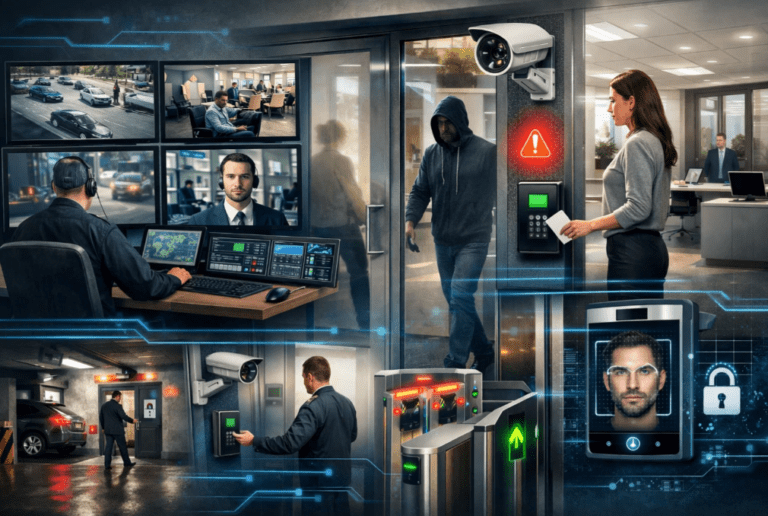
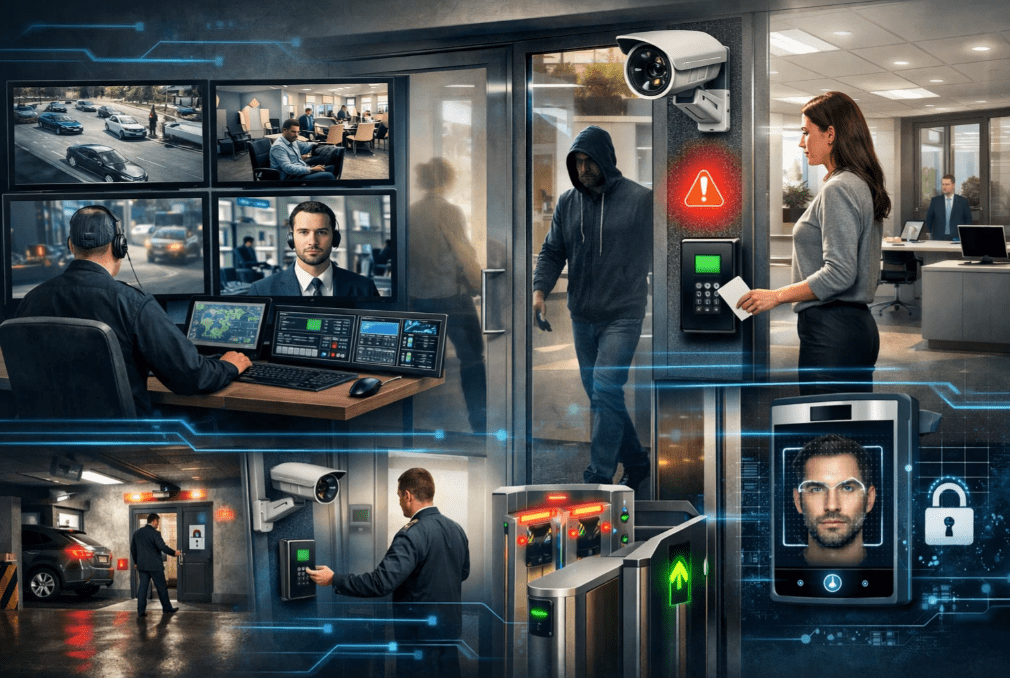
Integrating a video surveillance system with an access control system means connecting both platforms so they communicate and operate together in real time.
When integrated:
- Every access event (card swipe, biometric scan, mobile credential use) can trigger video recording.
- Access logs can be linked directly to corresponding video footage.
- Security operators can view entry data and live camera feeds in a single dashboard.
- Alerts can combine visual and access information for faster decision-making.
Rather than functioning as two separate tools, they become one coordinated security ecosystem.
Key Benefits of Integration
1. Real-Time Visual Verification
One of the most valuable advantages of integration is immediate visual confirmation.
When someone uses a credential to unlock a door, the system can automatically display the associated camera feed. This allows security personnel to confirm:
- The person matches the credential holder.
- There is no tailgating (an unauthorized person entering behind someone).
- No suspicious behavior is occurring at the entry point.
This instant cross-check significantly reduces the chances of credential misuse.
2. Faster Incident Investigation
Security incidents often require reviewing both access records and video footage. Without integration, teams must manually align time stamps from different systems.
Integrated systems automatically synchronize:
- Access event logs
- Camera recordings
- User credentials
For example, if a restricted storage room was accessed at 10:17 PM, the system can immediately pull up the corresponding video clip. This reduces investigation time from hours to minutes.
Faster investigations mean quicker resolution and less operational disruption.
3. Stronger Accountability
When video and access data are linked, it becomes much harder for individuals to deny involvement in an event.
If a door log shows that a specific credential was used and the video confirms the identity of the individual entering, accountability becomes clear. This transparency promotes responsible behavior among employees and contractors.
Knowing that access activity is visually verified often acts as a strong deterrent against misconduct.
4. Improved Prevention of Tailgating
Tailgating occurs when an unauthorized person follows an authorized individual into a restricted area without using their own credentials.
While access control systems cannot always detect tailgating alone, integrated video surveillance can help identify it quickly. Security teams can review footage tied directly to the access event and spot unauthorized entries.
In more advanced setups, intelligent video analytics can even trigger alerts if multiple individuals pass through a door on a single credential swipe.
5. Enhanced Emergency Response
During emergencies—such as fire alarms, lockdowns, or security breaches—having integrated systems provides a clearer picture of what is happening in real time.
For example:
- If a forced door entry alarm triggers, security can immediately view live footage from that location.
- During evacuations, administrators can verify who has exited the building based on access logs and visual confirmation.
This level of situational awareness can make a critical difference in response speed and decision-making.
6. Centralized Monitoring
Instead of switching between separate platforms, security personnel can monitor access events and camera feeds from a unified interface.
Centralized monitoring:
- Reduces human error
- Speeds up response time
- Simplifies training for operators
- Improves overall efficiency
In large facilities with multiple entry points, this streamlined oversight is especially valuable.
Practical Applications Across Different Environments
Corporate Offices
In office environments, integration helps protect:
- Server rooms
- HR departments
- Executive suites
- Research and development areas
When employees or contractors access sensitive areas, their credentials and associated footage create a clear audit trail.
Warehouses and Manufacturing Facilities
Inventory theft and unauthorized access to production areas are common concerns in industrial settings.
By linking access events to video footage, organizations can:
- Monitor loading docks
- Track after-hours entry
- Verify delivery and dispatch activity
- Reduce internal shrinkage
The system not only protects physical assets but also strengthens operational transparency.
Healthcare Facilities
Hospitals and clinics must protect sensitive areas such as:
- Pharmacies
- Data rooms
- Operating theaters
- Restricted patient areas
Integration ensures that only authorized personnel enter these spaces and that every entry can be visually confirmed.
Educational Institutions
Schools and universities benefit from tighter control over building access, especially after hours.
Integrated systems help administrators:
- Monitor campus entrances
- Track staff access
- Review incidents quickly
- Improve student safety
In an environment where safety is paramount, having both visual and access data combined offers reassurance and clarity.
Data Management and Compliance
Beyond physical protection, integration also supports compliance and reporting requirements.
Many industries require detailed records of who accessed certain areas and when. When these records are tied to visual documentation, audits become easier and more reliable.
Integrated systems can generate:
- Time-stamped access logs
- Linked video evidence
- Entry and exit summaries
- Exception reports
This level of documentation helps organizations meet regulatory standards and internal governance policies.
Challenges to Consider
While integration offers numerous advantages, it also requires thoughtful planning.
System Compatibility
Not all video surveillance systems and access control platforms are designed to integrate seamlessly. Choosing compatible technologies—or working with experienced professionals—is essential.
Data Storage Requirements
Linking video to access events can increase storage demands. Organizations must plan for sufficient capacity and retention policies.
Privacy Considerations
Combining access logs with video footage raises privacy questions. Clear policies should define:
- Who can access recorded footage
- How long data is retained
- How information is protected
Transparent communication with employees helps maintain trust and compliance.
Best Practices for Successful Integration
To maximize the benefits of integration, organizations should:
- Conduct a thorough security assessment.
- Identify high-risk entry points and sensitive areas.
- Ensure both systems use synchronized time settings.
- Train security personnel on using the unified interface.
- Regularly test alerts and incident response procedures.
Security is not static. Regular reviews and updates ensure the system continues to meet evolving needs.
The Future of Integrated Security
As technology advances, integration is becoming more intelligent and automated.
Artificial intelligence and analytics are enabling systems to:
- Detect unusual behavior patterns
- Recognize faces or license plates
- Trigger alerts based on predefined risk scenarios
- Generate automated reports
Rather than reacting after incidents occur, integrated security systems are gradually shifting toward proactive risk prevention.
Conclusion
In today’s complex security landscape, relying on isolated tools is no longer enough. A video surveillance system provides eyes on your environment, while an access control system governs who can enter. But when these systems operate together, they create something far more powerful.
Integration brings clarity, accountability, and efficiency. It reduces blind spots, speeds up investigations, strengthens compliance, and enhances overall protection. More importantly, it transforms security from a reactive measure into a coordinated, intelligent strategy.
Complete protection does not come from adding more hardware—it comes from connecting the tools you already have in smarter ways. By integrating video surveillance with access control, organizations take a significant step toward building a safer, more resilient environment for everyone inside.