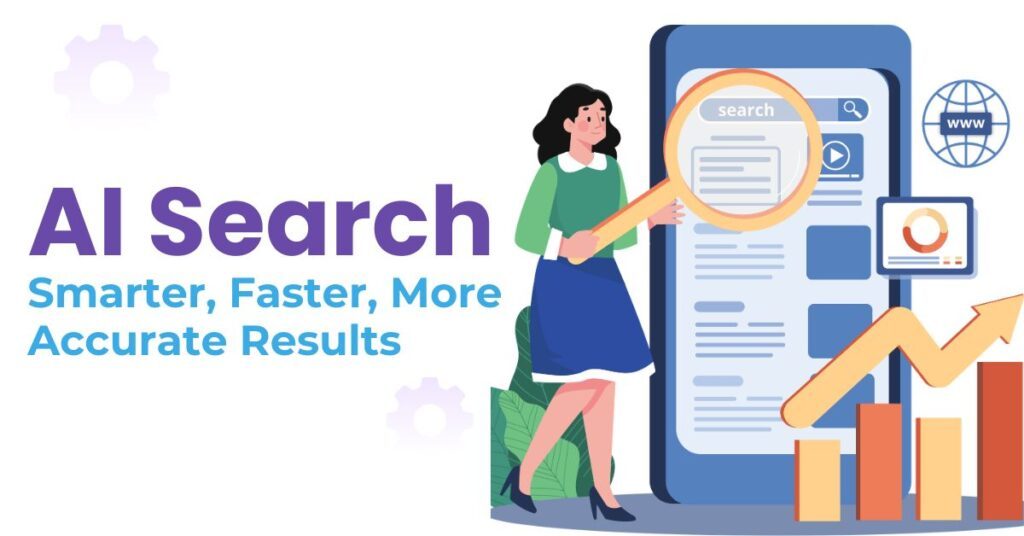
Let’s be honest — search isn’t what it used to be.
You type a question…
You get a full answer instantly…
You don’t open 10 tabs anymore.
And you move on.
Guess what?
Your customers do the same.
AI-assisted search engines aren’t evolving.
They’ve already evolved.
And the companies that understand this shift are quietly winning visibility without depending on clicks.
Grab a coffee.
Let’s break this down.
Search Is No Longer About Links
It’s about intelligence.
Traditional search worked like this:
You search →
You scan →
You compare →
You click →
You decide.
Now?
AI does the scanning.
AI does the comparing.
AI gives you the conclusion.
That transformation is powered by AI/ML Services for Smart Automation.
These systems don’t just match keywords.
They understand intent.
They analyse context.
They predict what you actually want.
And they deliver it instantly.
What’s Really Happening Behind the Screen
When you ask a question today, AI search engines:
- Take content from multiple sources
- Summarise it
- Structure it
- Deliver key insights
- Suggest follow-up questions
All in seconds.
This is not basic indexing.
This is an intelligent interpretation.
And behind this intelligence lies automation.
The Invisible Engine: Automation
Here’s what most people don’t realise.
AI search cannot function without automation.
That’s where process automation services and robotic process automation come in.
They help systems:
- Extract information from millions of pages
- Clean and structure unorganised data
- Categorise topics automatically
- Update knowledge in real time
- Scale without manual effort
Automation prepares the data.
Machine learning understands it.
AI delivers the answer.
That’s the stack.
And every modern Intelligent Automation company is building solutions around this model.
Zero-Click Is the New Normal
People don’t want to browse.
They want clarity.
AI search provides:
- Definitions
- Summaries
- Pros and cons
- Comparisons
- Step-by-step guidance
All without leaving the platform.
This is zero-click behaviour.
And it changes how businesses think about visibility.
Because traffic is no longer guaranteed.
Presence is.
Visibility Is the New Ranking
Here’s the mindset shift:
Ranking first doesn’t matter if AI summarises someone else.
Being quoted matters more than being clicked.
So how do you adapt?
You create content with “extractable wisdom.”
AI loves structure.
It loves clarity.
It loves expertise signals.
How to Make Content AI-Ready
If you want AI systems to surface your expertise, do this:
- Start with a clear one-sentence answer
- Add supporting bullet points
- Include real-world examples
- Define technical terms simply
- Use small, digestible paragraphs
- Add FAQ sections
- Use a structured schema
This makes your content reusable in AI summaries.
Think Topics, Not Just Keywords
AI doesn’t reward isolated blog posts.
It rewards authority.
When you deeply cover a subject — from basics to advanced insights — search engines start recognising expertise.
For example:
If you operate in automation, cover:
What automation means
How robotic process automation works
Differences between RPA and AI
Implementation challenges
Common myths
Real business case studies
That’s how an Intelligent automation company builds trust in AI-driven search environments.
Depth signals experience.
Experience signals authority.
Authority gets surfaced.
Search Is Becoming Conversational
AI-assisted search now supports follow-up questions.
You ask one thing.
It remembers context.
It refines the answer.
This conversational flow is enabled by:
- Natural language processing
- Predictive intent models
- Behaviour analysis systems
- Continuous learning algorithms
All powered by AI/ML Services for Smart Automation.
Search no longer feels mechanical.
It feels human.
What This Means for Businesses
If your organisation provides digital transformation, SaaS, consulting, or enterprise solutions, this shift directly impacts you.
Because AI now filters:
- Vendors
- Tools
- Frameworks
- Comparisons
- Thought leadership
Before users ever visit a website.
That means:
- Clear positioning matters.
- Structured expertise matters.
- Authority signals matter.
More than ever.
The Rise of Answer Engines Over Search Engines
Here’s another shift most businesses are ignoring.
Search engines are slowly becoming answer engines.
Earlier, Google’s job was to show options.
Now, its job is to reduce choices.
AI systems evaluate:
- Relevance
- Authority
- Clarity
- Freshness
- Structure
Then they compress it into a single, confident response.
That response becomes the user’s decision framework.
This is why structured expertise matters more than ever.
Because AI doesn’t show everything.
It selects what seems most reliable.
And reliability is built through depth, clarity, and automation-backed intelligence.
Why Data Structure Is the Real Competitive Advantage
Most companies focus on publishing more content.
But AI-assisted search rewards organised knowledge, not volume.
If your content is:
- Scattered
- Repetitive
- Over-optimised
- Keyword-heavy
AI struggles to interpret it.
The ecosystem benefits from automated operations because AI systems obtain value through their structured design.
And machine-readable content gets surfaced.
The Brands That Win Will Think Like Systems
In 2025, winning brands won’t just create content.
They’ll design systems.
Systems powered by:
- AI/ML models
- Robotic process automation
- Intelligent data workflows
- Continuous optimisation loops
Every forward-thinking intelligent automation company already understands this.
Because the future of search isn’t about publishing more.
It’s about building smarter knowledge ecosystems.
One that AI can interpret.
One that AI can summarise.
One that AI can trust.
The Big Reality
Search engines are becoming decision engines.
They interpret.
They summarise.
They recommend.
They shape perception.
And that perception is built on structured, automation-powered intelligence.
Supported by process automation services.
Enhanced by robotic process automation.
Delivered through advanced AI systems.
Final Takeaway
AI-assisted search engines are changing the way we find information by:
- Understanding intent instead of keywords
- Delivering instant, structured answers
- Using automation to manage data at scale
- Making search conversational
- Prioritising authority over clicks
It belongs to those building intelligent visibility.
And businesses powered by AI/ML Services for Smart Automation won’t just appear in search results.
They’ll shape them.