The modern construction landscape is defined by tight margins, strict regulatory standards, and an increasing demand for sustainable building practices. In this environment, the “nervous system” of any building—the Mechanical, Electrical, and Plumbing (MEP) systems—must be designed with absolute precision. Errors in these systems don’t just cause delays; they lead to expensive rework and long-term operational inefficiencies.
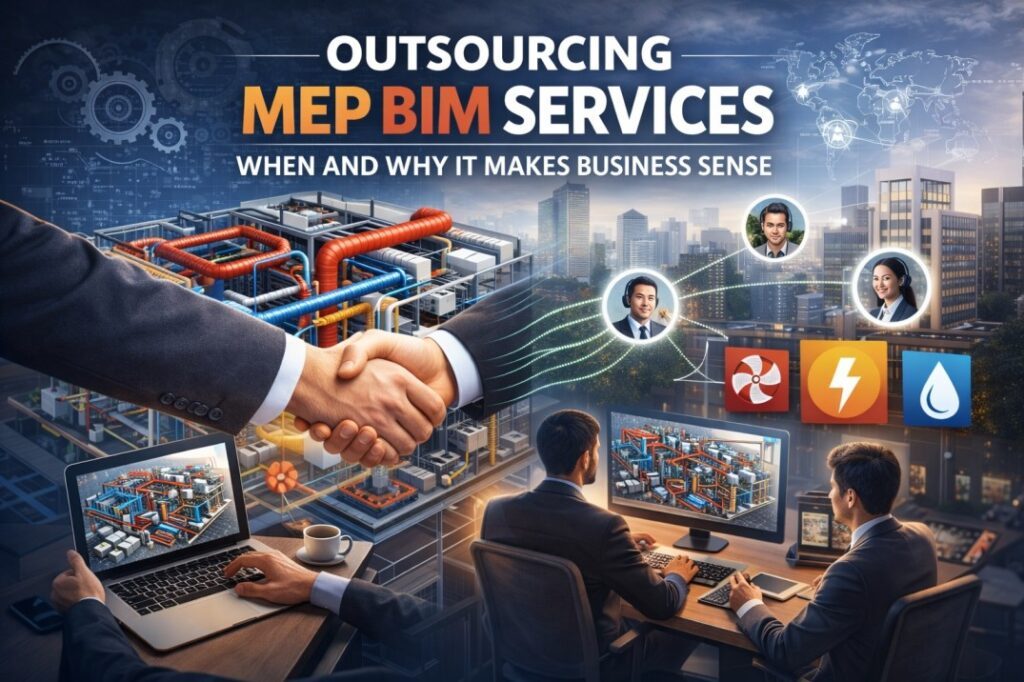
Building Information Modeling (BIM) has emerged as the standard solution to these challenges, offering a digital representation of the facility’s physical and functional characteristics. However, maintaining a full-scale, in-house BIM team is a significant financial and logistical burden. This is where the strategic decision of Outsourcing MEP BIM Services comes into play.
For many architecture, engineering, and construction (AEC) firms, the question is no longer if they should use BIM, but how to execute it most efficiently. This guide explores the strategic value of outsourcing these complex services and how it can transform your project delivery.
Understanding MEP BIM and Its Critical Role
MEP BIM is the process of creating a data-rich, 3D model that integrates mechanical, electrical, and plumbing designs. Unlike traditional 2D CAD drawings, which are static lines on a page, BIM models are intelligent. A duct in a BIM model knows what it is, what air volume it carries, and how it interacts with the structural beams around it.
The importance of this technology cannot be overstated. It facilitates “clash detection,” a process where software identifies if a pipe is running through a steel beam or if an electrical tray interferes with HVAC ductwork. By resolving these conflicts in the digital model before a single shovel hits the ground, contractors save thousands of dollars in on-site modifications.
However, executing high-level MEP BIM requires expensive software, powerful hardware, and, most importantly, highly skilled technicians who understand both the engineering principles and the software nuances.
The Strategic Case for Outsourcing
Many firms hesitate to outsource, fearing a loss of control. Yet, when analyzed through a business lens, keeping everything in-house often results in resource bottlenecks. Here is why Outsourcing MEP BIM Services is increasingly becoming the preferred operational model for successful firms.
1. Cost Efficiency Beyond Wages
The most obvious benefit is cost reduction, but it goes deeper than just comparing hourly rates. Hiring full-time BIM specialists involves recruitment fees, benefits, training, and potential severance costs. Furthermore, the infrastructure required to run software like Revit or Navisworks is substantial. High-performance workstations and expensive annual software subscriptions add significant overhead to a firm’s operational budget. Outsourcing converts these fixed costs into variable costs, allowing you to pay only for the work you need.
2. Access to Specialized Expertise
The BIM landscape changes rapidly. Keeping an in-house team updated on the latest codes, software updates, and industry standards requires continuous training. Specialized providers, such as Archdraw Outsourcing, dedicate their entire business model to staying at the forefront of this technology. By partnering with them, you gain immediate access to a pool of experts who have likely already solved the complex problems your current project is facing.
3. Scalability and Flexibility
The construction industry is cyclical. You might have three major projects kicking off in Q1 and a lull in Q3. An in-house team is static; you cannot easily hire and fire staff to match this volatility without damaging morale and reputation. Outsourcing offers elasticity. You can ramp up your team size instantly during crunch times and scale back when the workload lightens, ensuring you are never paying for idle resources.
4. Focus on Core Competencies
Your firm’s core competency might be innovative architectural design, structural engineering, or general contracting. It likely isn’t 3D modeling or clash detection. When your senior engineers spend hours modeling pipes and conduits, they aren’t focusing on high-level design optimization or client relationships. Outsourcing the technical labor of BIM allows your internal team to focus on high-value tasks that drive revenue and client satisfaction.
Navigating the Challenges of Outsourcing
While the benefits are compelling, outsourcing is not without its hurdles. Successful implementation requires acknowledging these potential pitfalls and establishing protocols to mitigate them.
Communication and Time Zones
One of the primary concerns is the “black box” effect, where a project is sent out and returns weeks later with errors.
The Solution: Establish a rigorous communication schedule. Utilize collaboration platforms like Slack, Microsoft Teams, or BIM 360 for real-time updates. If your partner is in a different time zone, view this as an advantage—a “follow the sun” workflow allows work to continue on your project while your local team sleeps, effectively doubling your productivity window.
Quality Control and Standards
Every firm has its own standards for layers, families, and Level of Development (LOD). A common failure point is receiving a model that doesn’t match your internal drafting standards.
The Solution: clearly define your BIM Execution Plan (BEP) before work begins. Provide your outsourcing partner with your template files, family libraries, and a clear scope of work regarding the required LOD (e.g., are you looking for LOD 300 for coordination or LOD 400 for fabrication?). Reputable partners like Archdraw Outsourcing will always ask for these standards upfront to ensure seamless integration.
Data Security
Intellectual property theft or data breaches are valid concerns when sharing sensitive project files.
The Solution: Only work with partners who have stringent data security measures in place. Look for firms that sign Non-Disclosure Agreements (NDAs), use secure FTP servers for file transfers, and have robust IT security policies.
Making the Right Choice for Your Firm
Deciding to move forward with Outsourcing MEP BIM Services is a strategic move that positions your firm for growth. It allows you to bid on larger, more complex projects without the fear of being understaffed or technically outmatched.
The key is to view the outsourcing provider not as a vendor, but as an extension of your own team. By vetting partners carefully and prioritizing communication, you can leverage global talent to deliver local excellence. whether you are looking to streamline your workflow or simply reduce overhead, partnering with established experts like Archdraw Outsourcing can provide the competitive edge necessary to succeed in today’s demanding construction market.