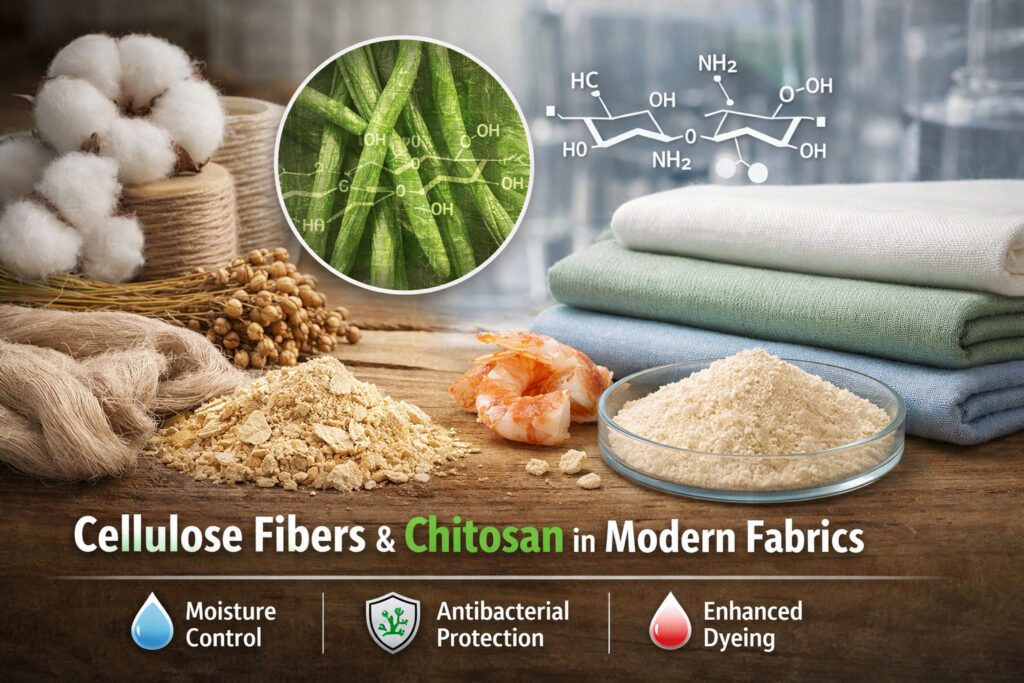
The textile industry is moving toward materials that are renewable, high performing, and environmentally responsible. Among the most important of these materials are cellulose fibers, which come from natural plant sources and offer excellent comfort, dyeability, and processing flexibility.
In recent years, interest has also grown in chitosan, a natural bio polymer used to add functional benefits such as antibacterial performance and better dye fixation to cellulose based fabrics.
This article explains in simple terms how cellulose works, why it is so useful in textiles, and how chitosan is helping create advanced modern fabrics.
What Are Cellulose Fibers
Cellulose is a natural polymer found in plants. It forms the structure of wood cotton and many other fibers. In textiles, cellulose fibers are divided into two main types.
Natural cellulose fibers include cotton flax hemp and jute.
Regenerated cellulose fibers include viscose modal lyocell and cupro. These are made by dissolving wood pulp and turning it back into fiber through controlled chemical processes.
Both types share the same basic chemistry, which gives them similar comfort and dyeing behavior.
Why Cellulose Works So Well in Fabrics
The molecular structure of cellulose contains groups that attract water and dyes. Because of this, cellulose based fabrics offer several practical advantages.
They absorb moisture well and feel cool on the skin
They dye easily and produce rich colors
They are soft and breathable
They can break down naturally under the right conditions
These qualities make cellulose fibers popular for clothing, home textiles, medical products, and hygiene fabrics.
How Cellulose Fibers Are Made
Different manufacturing processes create slightly different performance levels.
The viscose process converts pulp into fiber through chemical reactions.
The lyocell process uses a closed loop solvent system with high chemical recovery.
Modal and cupro processes focus on improving softness and strength.
These production choices influence how the final fabric drapes, feels, and lasts during use.
Adding New Functions to Cellulose Fabrics
Today’s fabrics often need more than comfort. They may require odor control wrinkle resistance or protective features.
This is achieved through finishing treatments such as:
Enzymes to smooth the fiber surface
Plasma treatments to improve chemical bonding
Crosslinking systems for stability
Bio based coatings for added performance
Among these, chitosan has become especially valuable.
How Chitosan Improves Cellulose Based Textiles
Chitosan is made from natural sources like shellfish waste or fungi. It is biodegradable and safe to use. When applied to cellulose fabrics, chitosan can provide:
Antibacterial protection
Better dye fixation
Improved moisture control
Soft protective surface layers
Support for eco friendly finishing systems
Because chitosan bonds well with cellulose, it can remain effective even after repeated washing.
Sustainability and the Future of Cellulose Fibers
Sustainability is one of the main reasons demand for cellulose is rising. Improvements in pulp sourcing solvent recovery and water saving dyeing processes are making cellulose textiles more responsible.
Research is also exploring recycled cellulose fibers new spinning technologies and natural finishing systems based on materials like chitosan.
Conclusion
The simple but powerful chemistry of cellulose fibers makes them essential to modern textiles. They offer comfort dyeability and flexibility across many applications. When combined with bio based finishes such as chitosan, they can deliver extra performance while supporting sustainability goals.
Understanding these materials helps textile producers and brands develop better fabrics for the future.