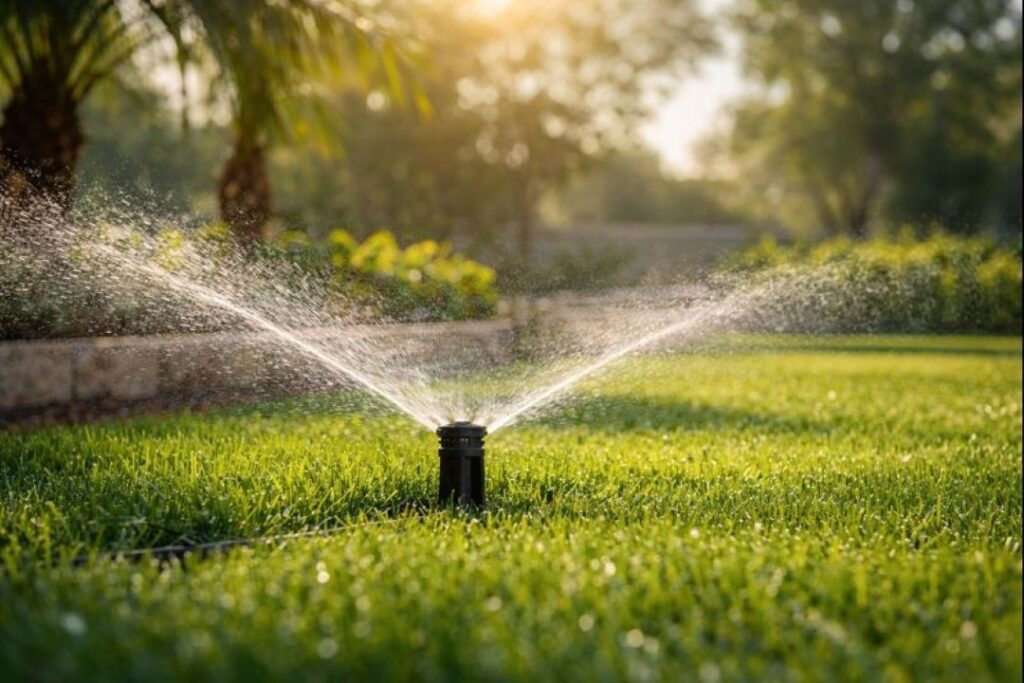
A sprinkler machine works because grass thrives on steady, even moisture rather than guesswork watering.
In hot, dry climates, controlled irrigation keeps roots active, blades resilient, and color consistent. Homeowners who want lawns that handle heat, pets, and daily use rely on systems that water deeply and evenly.
This approach supports stronger grass growth while reducing stress caused by drought cycles or uneven hand watering. Over time, the lawn looks better, recovers faster, and needs fewer repairs.
Healthy lawns are not about more water. They are about the right water, applied the right way. That balance is what modern irrigation delivers best.
Consistent Watering Builds Stronger Roots
Grass health starts below the surface. Roots need moisture that reaches deeper soil layers. Shallow watering encourages weak roots that dry out fast.
Consistent irrigation allows water to soak evenly into the ground. This promotes deeper root growth. According to University of California Cooperative Extension research, deeper roots improve heat tolerance and recovery rate during stress periods.
Lawns with strong roots show clear benefits. They stay green longer in summer. They bounce back faster after foot traffic. They resist thinning and bare patches.
Hand watering often misses these goals. Some areas get soaked. Others stay dry. Over time, this creates uneven growth and weak turf zones.
A properly set irrigation system, supported by a proper lawn sprinkler setup, avoids that pattern. Every zone receives measured water. Roots grow evenly. The lawn matures as one healthy surface instead of mixed patches.
Heat Survival in Southern California Yards
Southern California climate conditions are demanding. Long dry seasons, high temperatures, and water restrictions put pressure on turfgrass.
Warm-season turfgrass performs best here. Bermuda grass varieties are especially popular for their heat tolerance and durability. Still, even heat-loving grass needs reliable moisture.
Irrigation systems help manage this balance. They apply water during early morning hours when evaporation stays low. This protects moisture levels without wasting water.
Research from California water authorities shows that early, efficient irrigation reduces water loss by up to 30 percent compared to midday watering. That efficiency matters during drought periods.
Lawns watered correctly stay cooler at the soil level. Cooler soil protects roots. It also improves nutrient uptake. The result is grass that survives heat waves with less stress.
Even Coverage Supports Uniform Growth
Uneven watering leads to uneven lawns. Some areas grow thick. Others thin out. This affects both appearance and durability.
Sprinkler systems are designed for coverage balance. Heads are spaced to overlap spray patterns. This ensures every section receives similar moisture.
Uniform watering supports even blade growth. It also improves mowing results. The lawn cuts cleaner and looks smoother.
Professionals often see this difference during installations. RototillerGuy, for example, frequently works with lawns damaged by poor irrigation layouts. Once coverage improves, grass density follows.
Uniform growth also limits weed pressure. Healthy, thick turf leaves less room for invasive plants. University turfgrass studies confirm dense lawns naturally reduce weed establishment.
Foot Traffic and Family Use Demand Recovery Power
Families want lawns that handle activity. Kids run. Pets play. Guests gather. Grass must recover quickly after stress.
Recovery depends on moisture availability. Grass needs water to repair damaged blades and roots. Without it, worn areas stay bare.
Bermuda grass varieties are known for strong recovery rates. When paired with steady irrigation, they spread and heal fast. This makes them ideal for active yards.
Irrigation helps damaged areas bounce back within days instead of weeks. The lawn stays usable. Mud patches stay limited.
This matters for homeowners who value function over appearance alone. A lawn should support real life, not restrict it.
Water Conservation Without Lawn Sacrifice
Water efficiency matters more than ever. Many homeowners fear irrigation systems waste water. In reality, efficient systems reduce waste.
Modern setups deliver precise amounts based on soil type and sun exposure. This prevents runoff and overwatering.
According to studies from the Irrigation Association and regional water agencies, controlled systems use less water than manual hoses when set correctly.
Benefits include:
- Reduced evaporation loss
- Lower water bills
- Healthier root zones
This balance allows lawns to stay green within local water limits. Conservation and performance can work together.
Long-Term Lawn Durability Depends on Planning
Grass longevity depends on consistent care patterns. Irrigation is not a quick fix. It is a long-term investment.
Lawns with planned watering schedules age better. Soil structure stays stable. Roots remain active. Thatch buildup stays manageable.
Professionals often design systems alongside turf selection. Warm-season turfgrass paired with proper watering lasts longer and needs fewer repairs.
This planning mindset separates short-term fixes from lasting landscapes. Homeowners who value durability benefit most from professional installation and guidance.
Frequently Asked Questions
Q1: How often should lawns be watered during hot months?
Most warm-season grasses need deep watering two to three times weekly during peak heat. Early morning cycles work best. This timing limits evaporation and supports deeper roots. Local watering rules should always guide schedules.
Q2: Does irrigation help Bermuda grass spread faster?
Yes. Bermuda grass spreads through runners that need moisture to grow. Consistent watering supports faster recovery and thicker coverage, especially after foot traffic or mowing stress.
Q3: Can sprinklers reduce brown patches?
Brown patches often come from uneven moisture. Balanced irrigation helps prevent dry zones. When combined with proper mowing, color and density improve noticeably.
Q4: Is irrigation wasteful during droughts?
Not when managed correctly. Efficient systems use less water than hand watering. They apply water only where needed and at the right time, supporting conservation goals.
Q5: Do pets damage lawns even with irrigation?
Pets can stress grass, but watered lawns recover faster. Strong roots and healthy blades repair damage more effectively, keeping surfaces usable and green.
Conclusion
Healthy lawns depend on consistency, not shortcuts. A sprinkler machine supports deep roots, heat tolerance, and long-term durability when designed correctly.
In Los Angeles yards, Bermuda grass thrives when paired with efficient irrigation that respects water limits and daily use.
Professional planning makes the difference. RototillerGuy brings over 25 years of hands-on experience, more than 500 local reviews, and deep expertise in lawn installation, landscaping, and sprinkler services. Their approach focuses on performance first, helping homeowners enjoy lawns built to last.