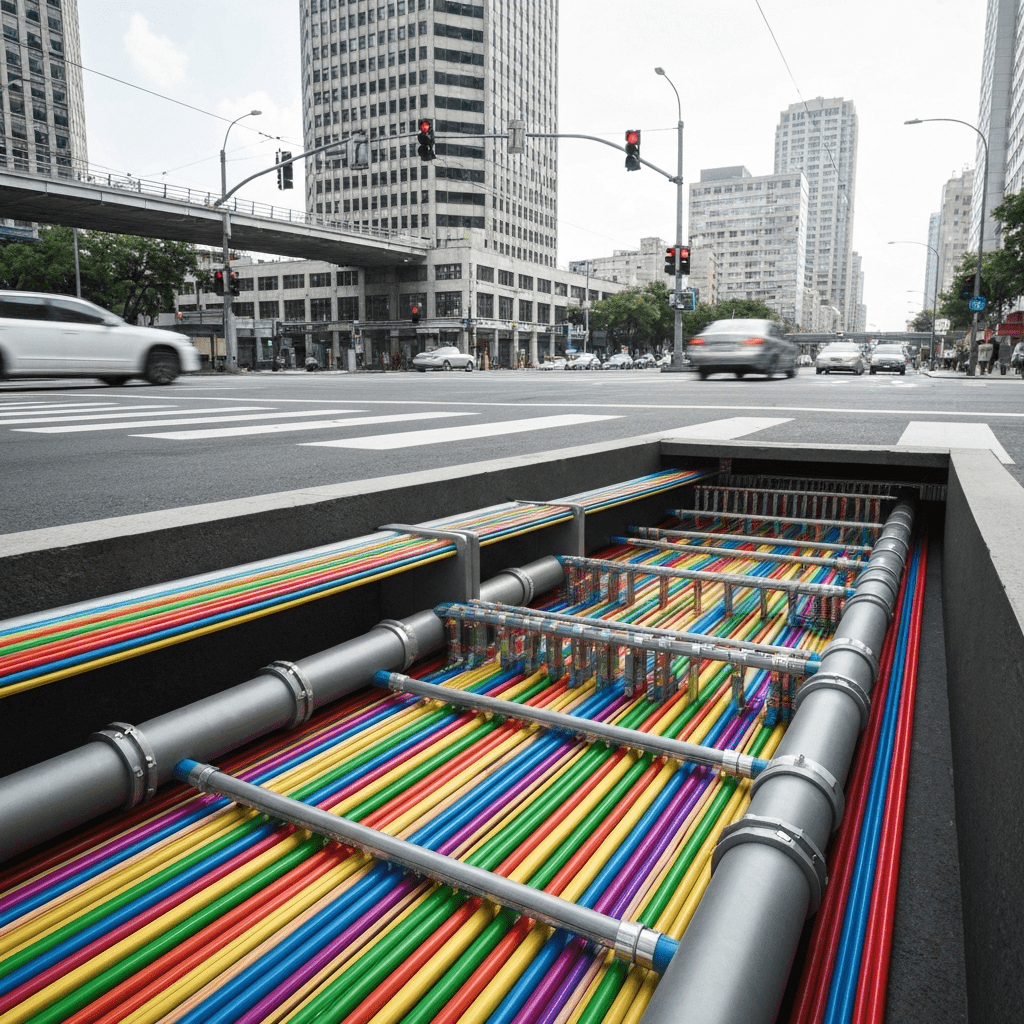
Public transportation is the lifeblood of a modern metropolis. Every day, millions of people rely on metros, trams, and light rail systems to move safely and efficiently. Behind the sliding doors and digital displays lies a vast, complex machine powered by electricity and data. The cabling solutions for these networks are the arteries of transit, delivering the massive power needed to move trains and the delicate signals needed to keep them safe. Designing cables for this environment requires balancing extreme power loads with absolute safety reliability.
The Power to Move: Traction Cables
The primary job is movement. Trains require enormous amounts of electrical energy.
- Third Rail and Catenary: Specialized high-voltage cables deliver DC or AC power from substations to the trackside third rail or overhead catenary lines. These cables must be weather-resistant, UV-stable, and capable of handling massive current spikes as trains accelerate.
- On-Board Power: Inside the train, highly flexible cables distribute power to the traction motors. These must withstand constant vibration and mechanical shock without fatigue.
The Brain of the System: Signaling and Control
A modern metro is largely automated. It relies on a constant stream of data to know where every train is.
- Signaling Cables: These carry the vital “stop” and “go” information. They are the most critical safety component.
- Interference Immunity: Railways are electrically noisy environments. Traction motors generate massive electromagnetic fields. Signaling cables must feature heavy-duty shielding (screening) to prevent this noise from corrupting data, which could lead to a signaling failure or accident.
Safety Underground: Tunnel Infrastructure
Most mass transit relies on tunnels. In these confined spaces, fire safety is the single most important design factor.
- LUL and NFPA Standards: Global standards (like London Underground Limited) mandate strict performance.
- Low-Smoke Zero-Halogen (LSZH): All cables in tunnels and stations must be LSZH. In a fire, they must not release toxic fumes (which incapacitate passengers) or dense black smoke (which obscures exit routes).
- Fire Survival: Critical circuits (emergency lighting, tunnel ventilation fans) use Fire-Resistant cables that continue to work even when burning, ensuring life-safety systems operate during an evacuation.
Durability and Maintenance
Public transport runs 24/7. Maintenance windows are short.
- Rodent Resistance: Cables in tunnels are often attacked by rats. Armored cables or glass-yarn braids are used to prevent gnawing damage.
- Longevity: Infrastructure is built to last 50 years. Cables sourced from leading cable manufacturers in uae are tested for long-term aging to ensure they don’t become brittle or fail prematurely, reducing the need for disruptive cable replacement projects.
Conclusion: Reliable Transit Starts with Reliable Wire
The efficiency and safety of public transportation rest on the quality of its connections. From the high-voltage surge that accelerates a train to the digital pulse that switches a track, specialized cabling solutions are the foundation of urban mobility. By prioritizing fire safety, durability, and signal integrity, cable engineering ensures that the city keeps moving.
Your Public Transport Cable Questions Answered (FAQs)
- What is a “traction cable”?
A traction cable is a heavy-duty power cable used to supply electricity to the propulsion system of the train (via the third rail or overhead line). It is designed to carry very high currents and withstand outdoor environmental conditions. - Why is fire safety so critical for metro cables?
Metros often run in tunnels and underground stations. In these enclosed spaces, smoke and toxic gas from a fire are deadly and cannot easily escape. Cables must be LSZH (Low-Smoke Zero-Halogen) to ensure the air remains breathable and exits remain visible during an emergency. - How do signaling cables prevent interference from the trains?
Signaling cables use shielding (metal foils or braids wrapped around the conductors). This shield intercepts the electromagnetic noise generated by the train’s motors and high-voltage lines, draining it to the ground before it can corrupt the safety signals. - What are “rolling stock” cables?
Rolling stock cables are the cables installed inside the train cars themselves. They are specially designed to be lightweight (to save energy) and thin-walled (to save space), while still being fire-safe and tough enough to handle vibration. - Why do tunnel cables need rodent protection?
Tunnels and trackside ducts are common habitats for rats. Rodents often chew on cables to sharpen their teeth. If they chew through the insulation, it causes short circuits and signal failures. Steel armor or glass-fiber barriers are used to stop them.