Your jockey wheel might be one of the smallest components on your camper trailer, but it’s definitely one of the hardest working. Whether you’re hitching up for a weekend camping trip or manoeuvring your van into a tight spot, your jockey wheel cops a fair bit of punishment. The good news? With a bit of regular TLC, you can keep it running smoothly for years to come.
Why Jockey Wheel Maintenance Matters
Let’s face it – most of us don’t think twice about our jockey wheel until it stops working. But here’s the thing: a well-maintained jockey wheel makes hitching and unhitching a breeze, prevents damage to your trailer, and saves you money in the long run.
A dodgy jockey wheel can turn a simple camping trip into a frustrating nightmare. Imagine struggling with a seized handle or dealing with a collapsed wheel in the middle of nowhere. Not ideal, mate.
Understanding Your Jockey Wheel
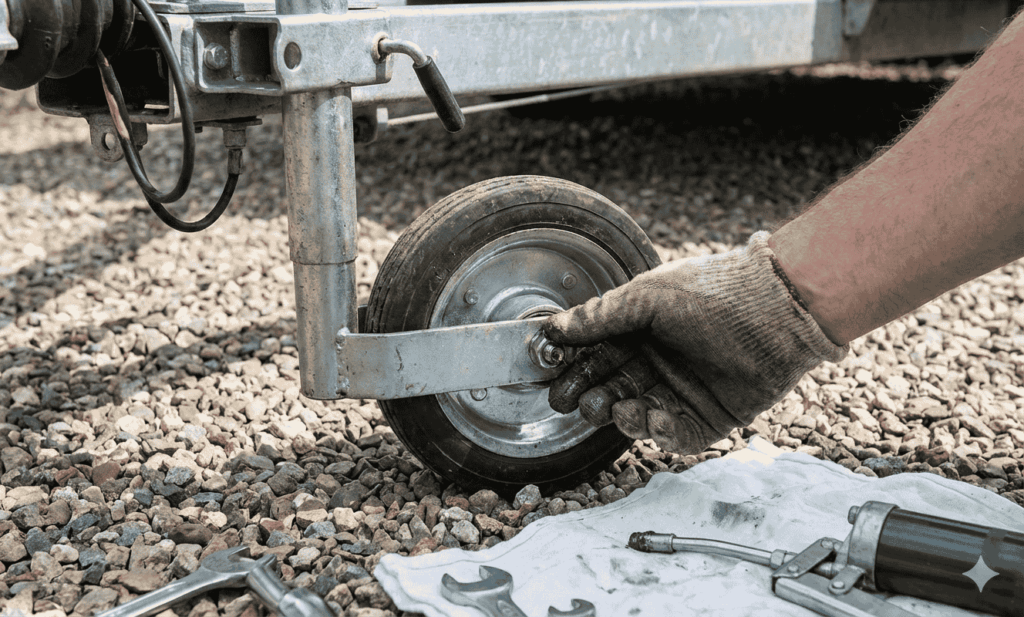
Before we dive into maintenance, it’s worth knowing what you’re working with. Most jockey wheels for caravans feature a simple but effective design: a vertical tube with a winding mechanism, a shaft that extends and retracts, and a wheel at the bottom.
The quality can vary significantly between different models. Some camper trailer jockey wheels come with basic steel construction, while others feature galvanised or powder-coated finishes for better corrosion resistance. Knowing your specific model helps you maintain it properly.
Regular Cleaning: Your First Line of Defence
After each trip, especially if you’ve been off-road or on dusty tracks, give your jockey wheel a good clean. It sounds basic, but this simple step prevents most problems down the track.
Use a brush to remove dirt, mud, and debris from the wheel, shaft, and winding mechanism. Pay special attention to the areas where the shaft slides in and out – this is where grit tends to accumulate and cause issues.
A quick spray with fresh water works wonders, particularly if you’ve been near the coast. Salt air is brutal on metal components, and a rinse can prevent corrosion before it starts.
Lubrication: Keep Things Moving Smoothly
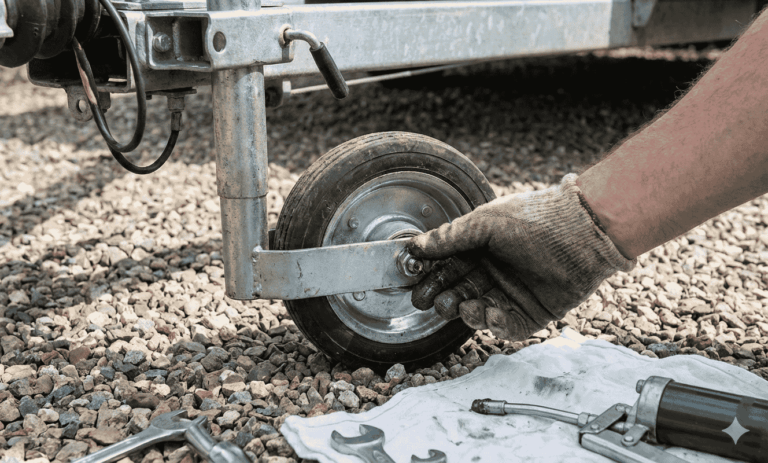
A well-lubricated jockey wheel operates smoothly and lasts longer. Make lubrication part of your regular maintenance routine, ideally every few months or after any beach or dusty trips.
For the winding mechanism and gears, use a quality marine grease or lithium-based lubricant. These products resist water and provide long-lasting protection. Apply lubricant to all moving parts, including the handle mechanism and any visible gears.
The vertical shaft needs attention too. Extend it fully and apply a thin coating of grease or silicone spray along its length. This prevents rust and ensures smooth operation when raising or lowering your trailer.
Don’t forget the wheel bearing. If your jockey wheel for trailer has a serviceable bearing, pack it with grease annually. This keeps the wheel spinning freely and prevents premature wear.
Inspect for Wear and Damage
Regular inspections catch small problems before they become big headaches. Every couple of months, take a few minutes to check your jockey wheel thoroughly.
Look for cracks in the wheel itself, especially if it’s plastic. Check the mounting bracket for signs of stress or loose bolts. Examine the shaft for rust, dents, or excessive wear.
Test the winding mechanism by extending and retracting the shaft fully. It should move smoothly without binding or unusual resistance. If you notice any grinding or difficulty, it’s time for a deeper clean and fresh lubricant.
Protecting Against Corrosion
Rust is the enemy of any jockey wheel, particularly in Australia’s harsh conditions. Coastal areas, humidity, and exposure to the elements all accelerate corrosion.
If you spot surface rust early, remove it with a wire brush or fine sandpaper. Apply a rust converter product, then touch up with matching paint or a rust-preventative coating.
For long-term storage, consider covering your jockey wheel or storing your trailer in a shed. If that’s not possible, at least ensure the wheel is fully retracted and apply a protective coating to exposed metal surfaces.
When to Replace Parts
Even with excellent maintenance, parts eventually wear out. The wheel itself typically shows wear first – look for flat spots, cracks, or a wobbly bearing.
Most jockey wheels for caravans have replaceable components. Wheels, handles, and even entire winding mechanisms can usually be swapped out without replacing the whole unit.
If your shaft becomes bent or severely corroded, or if the mounting bracket develops cracks, it’s time to consider a complete replacement. Don’t take chances with structural integrity – it’s not worth the risk.
Storage Tips for Extended Periods
If you’re storing your camper trailer for an extended period, give your jockey wheel some extra attention. Clean it thoroughly, apply a generous coating of lubricant to all moving parts, and fully retract the shaft.
Consider placing a block under your trailer’s coupling to take weight off the jockey wheel during storage. This reduces stress on components and extends their lifespan.
Make Maintenance a Habit
The secret to a long-lasting jockey wheel isn’t complicated – it’s consistency. Build these simple maintenance tasks into your camping routine. Clean after each trip, lubricate regularly, and inspect periodically.
Your future self will thank you when you’re effortlessly hitching up for another adventure while someone else struggles with a neglected, seized jockey wheel. A few minutes of maintenance now saves hours of frustration later.
With proper care, your camper trailer jockey wheel will provide reliable service for many years and countless adventures across this great country.