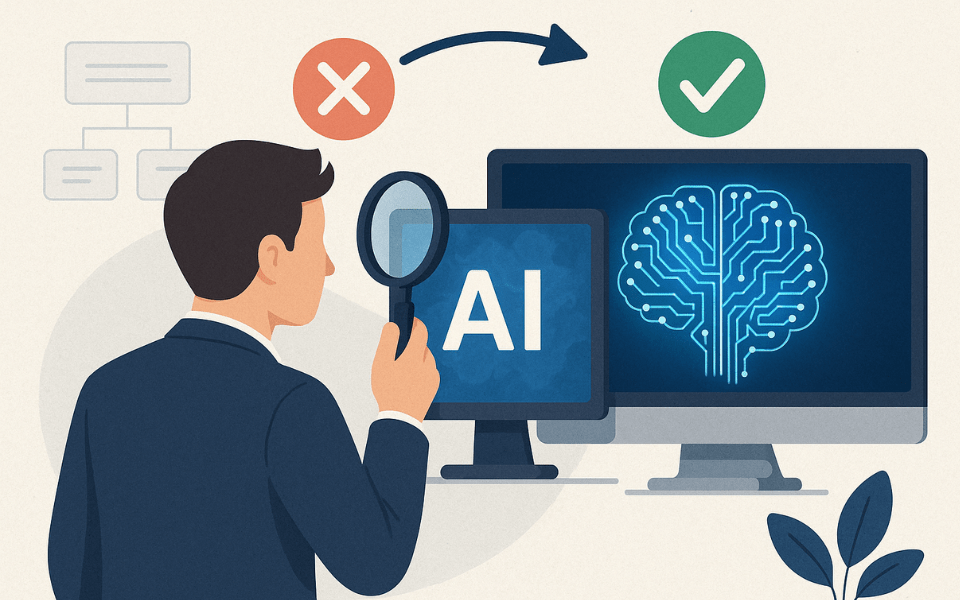
Understanding Adaptive AI and Its Value
In today’s rapidly evolving business landscape, enterprises cannot rely on static AI models that perform well only under predefined conditions. Adaptive AI refers to intelligent systems capable of continuously learning from new data, adjusting their algorithms, and optimising performance without requiring manual intervention.
The value of adaptive AI lies in its ability to drive measurable ROI. By dynamically improving predictions, automating decision-making, and reducing operational inefficiencies, enterprises can not only save costs but also enhance customer satisfaction, operational resilience, and competitive advantage. Choosing the right Adaptive AI Partner ensures that these systems are implemented effectively, delivering long-term value rather than short-term gains.
How Adaptive AI Differs from Traditional AI
Traditional AI models are typically static. They are trained on historical datasets and deployed with fixed parameters. Over time, performance may degrade as real-world conditions evolve, requiring manual retraining or updates.
In contrast, adaptive AI introduces continuous learning mechanisms, including reinforcement learning, online learning, and feedback loops. These systems can:
- Adjust to changing customer behavior patterns in real-time
- Detect anomalies or emerging trends automatically
- Optimize workflows dynamically without constant human oversight
For enterprises operating in fast-moving sectors like e-commerce, finance, or supply chain, adaptive AI provides a distinct advantage: decisions and predictions remain accurate and timely, ensuring sustained ROI.
Core Mechanisms of Adaptive AI
The success of adaptive AI hinges on three key mechanisms:
- Data-Driven Learning: Adaptive AI systems constantly ingest new data, enabling them to recognize patterns, identify trends, and improve predictive accuracy. For example, an e-commerce recommendation engine can dynamically adjust product suggestions based on recent customer interactions.
- Feedback Loops: These systems use continuous feedback to measure outcomes and refine their algorithms. In financial services, adaptive AI can evaluate fraud detection outcomes to reduce false positives and improve detection rates.
- Self-Optimisation: By autonomously adjusting hyperparameters or reweighting models, adaptive AI improves efficiency and effectiveness over time. Enterprises that leverage this capability often see gains of 10–30% in operational performance within months of deployment.
Selecting the right Adaptive AI Partner ensures these mechanisms are implemented optimally, aligning with business needs and technological infrastructure.
Measuring ROI in Adaptive AI Deployments
Understanding the ROI of adaptive AI requires both direct and indirect metrics:
- Direct Metrics: Reduction in operational costs, faster processing times, and decreased manual intervention. For instance, a logistics company implementing adaptive AI for routing optimization reported 15% savings in fuel and delivery time within six months.
- Indirect Metrics: Enhanced customer experience, improved decision-making, and reduction in errors. A customer service chatbot that adapts to user interactions can increase satisfaction scores and reduce average handling time, indirectly boosting revenue.
A competent Adaptive AI Partner can help enterprises define KPIs, measure improvements accurately, and calculate ROI in both financial and operational terms.
Key Use Cases Across Industries
Adaptive AI is applicable across multiple sectors:
- E-commerce: Dynamic pricing engines and personalized recommendations improve conversions and customer retention.
- Finance: Fraud detection systems continuously refine risk models to prevent unauthorized transactions.
- Supply Chain Management: Demand forecasting and inventory optimization adapt to fluctuations in real-time.
- Healthcare: Predictive diagnostics and personalized treatment recommendations evolve as patient data and research findings expand.
Each use case demonstrates how continuous learning leads directly to measurable business outcomes, reinforcing the value of choosing the right Adaptive AI Partner.
Implementation Considerations
Deploying adaptive AI successfully requires careful planning. Enterprises must consider:
- Infrastructure: Cloud-based or hybrid environments capable of handling real-time data ingestion and model retraining.
- Data Quality: High-quality, structured data is essential; garbage-in, garbage-out principles apply strongly to continuous learning systems.
- Integration: Adaptive AI must seamlessly integrate with CRM, ERP, or other enterprise systems to maximize value.
An experienced Adaptive AI Partner helps navigate these considerations, ensuring smooth deployment and minimal disruption.
Challenges and Risks
Despite its advantages, adaptive AI poses challenges:
- Model Drift: Continuous learning can lead to unintended bias if not monitored carefully.
- Overfitting: Systems may become too sensitive to recent data without generalizing effectively.
- Operational Complexity: Managing continuous updates, monitoring, and scaling requires specialized expertise.
The right Adaptive AI Partner mitigates these risks by implementing robust monitoring, validation, and governance protocols.
Best Practices for Maximizing ROI
Enterprises can enhance ROI from adaptive AI by:
- Combining human oversight with automated learning to balance accuracy and accountability.
- Implementing iterative deployment strategies with staged testing to measure improvements before full-scale adoption.
- Establishing continuous performance monitoring to detect drift, optimize learning, and ensure alignment with business KPIs.
By following these best practices, organizations can extract the full value of adaptive AI systems while maintaining operational stability.
Selecting the Right Adaptive AI Partner
Choosing a partner is as important as selecting the technology. Enterprises should evaluate potential Adaptive AI Partners based on:
- Demonstrated expertise in continuous learning models and adaptive algorithms.
- Experience across industries relevant to the enterprise.
- Capability in MLOps, model monitoring, and performance optimization.
- Long-term support and scalability for enterprise-grade deployments.
A strategic partner ensures that adaptive AI delivers both technological excellence and tangible business outcomes.
Conclusion: Strategic Value of Adaptive AI
Adaptive AI is no longer optional for enterprises seeking sustained competitive advantage. By continuously learning and optimising, these systems drive measurable ROI through operational efficiency, improved decision-making, and enhanced customer experiences.
Investing in the right Adaptive AI Partner ensures that the deployment is not only technically robust but also strategically aligned with business objectives, laying the foundation for long-term AI-driven growth.