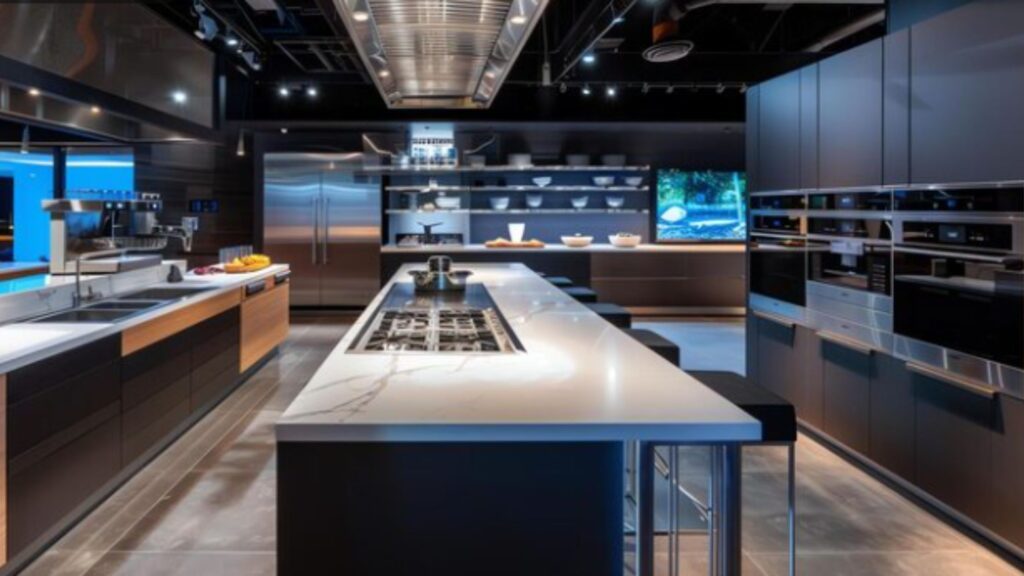
Every food business wants speed, accuracy, and smooth teamwork inside the kitchen. Many owners also work with limited space. In this kind of setup, a fixed kitchen layout slows everything down. But a flexible layout feels like fresh air. This is where modular commercial kitchen design changes the way cooking stations function. Each workstation works like a movable block. It connects, detaches, shifts, and expands when needed.
Now add AI-driven equipment into this system. AI monitors heat, predicts cooking time, manages inventory, gives alerts, and does repetitive tasks with control. Together they form kitchens that think, adapt, and respond quickly during rush hours. They also reduce human error and help chefs stay focused on cooking instead of constant checking.
How Modular Design Works With AI Tools
Modular commercial kitchen design uses units that act like building blocks, while AI tools function like the brain that drives decision-making. One gives structure, the other gives intelligence. Workstations snap into place based on the menu, and AI adjusts temperature, cooking cycles, and workload across stations with smooth response.
Example: If 80 orders come in at once, AI increases burner intensity, sets accurate timers, and displays queue timing on the panel. The staff stay calm. Food reaches the counter without delay.
Key strengths of this combination:
- Workstations move freely without reconstruction
- AI sensors detect heating needs automatically
- Smart devices respond based on real-time order load
- Kitchens scale up during peak hours without stress
How AI Improves Each Modular Section
Every section in a modular kitchen benefits when AI becomes part of the workflow.
- Prep Station: Smart cutters adjust speed for veggies, fruits, and meat. No rough chopping. Each batch looks the same.
- Cooking Station: Burners and ovens auto-modify heat levels. They measure internal food temperature and stop when ready.
- Frying Station: Oil quality sensors stop overuse. They guide operators when the oil needs replacing. Food stays crisp.
- Refrigeration Zone: AI tracks ingredient levels and expiry. It sends alerts when stock is low or spoiling.
- Dishwashing Zone: Water use stays controlled. Sensors detect load size and set washing cycles.
This structure creates a balanced kitchen where every block responds instead of waiting for instructions.
Faster Workflow During Heavy Rush
A major pain point in restaurants is peak-hour chaos. Orders stack up. Staff get stressed. Mistakes rise. With modular space and AI commands, the kitchen runs more like a coordinated system.
Flow example:
- Order enters system
- AI splits tasks and assigns it to cooking stations
- Each module works with perfect timing
- Food comes out in sequence without traffic inside workspace
This cuts waiting time and improves guest experience.
Why AI + Modular Saves Space and Time
Many kitchens run short on area. A fixed structure wastes corners and blocks movement. Modular layout clears pathways. Stations shift like puzzle pieces. One extra fryer? Add it. A new grill? Slot it in.
AI helps by planning how modules should be arranged. It studies order history and suggests where prep, grill, and plating should sit for fewer steps. Less movement means less fatigue and more output.
Benefits in action:
- Faster service line output
- Reduced staff exhaustion
- Clean movement path
- Easy upgrades with new tech
How This System Reduces Human Error
- AI timers stop overcooking
- Heat control prevents burns
- Automatic restock reminders avoid shortages
- Recipe programming keeps taste constant
- Smart safety locks stop accidents
When the kitchen thinks ahead, staff can focus on creativity and finishing instead of constant monitoring.
Training New Staff Becomes Much Easier
Training a new chef takes time. But AI reduces dependency on memory. New staff simply follow digital screens and cues. Each instruction appears step by step. This cuts training time and keeps output consistent.
Short example:
A new hire joins a pizza station. Instead of memorizing heat levels, they tap a preset mode. AI handles temperature control. Taste stays the same across batches.
Cost Efficiency That Grows Over Time
Modular layouts do not require full demolition for upgrades. A damaged part is swapped, not rebuilt. AI reduces waste by tracking food use. Small savings repeat every day and turn into major profit yearly.
Owners get long-term control without large repair bills.
Future Of Modular Kitchens With AI
Here is what is coming next:
- Voice-guided cooking systems
- Fryers that stop automatically if oil degrades
- Smart grills that flip food with sensors
- Inventory managed by image recognition
- Real-time analytics for demand forecasting
Food businesses will build kitchens that adjust like software. Update a menu? Update the layout.
The Bottom Line:
Modern restaurants grow faster when kitchens move with them. Modular blocks bring freedom. AI brings speed and accuracy. The setup reduces workload, improves timing, and keeps food quality stable during long shifts.
Soon, many brands will shift toward new commercial kitchen designs with plug-in modules and smart cooking intelligence. This format suits cloud kitchens, food courts, hotels, small cafes, and multi-branch franchises. It also builds a space that reacts instead of waiting.