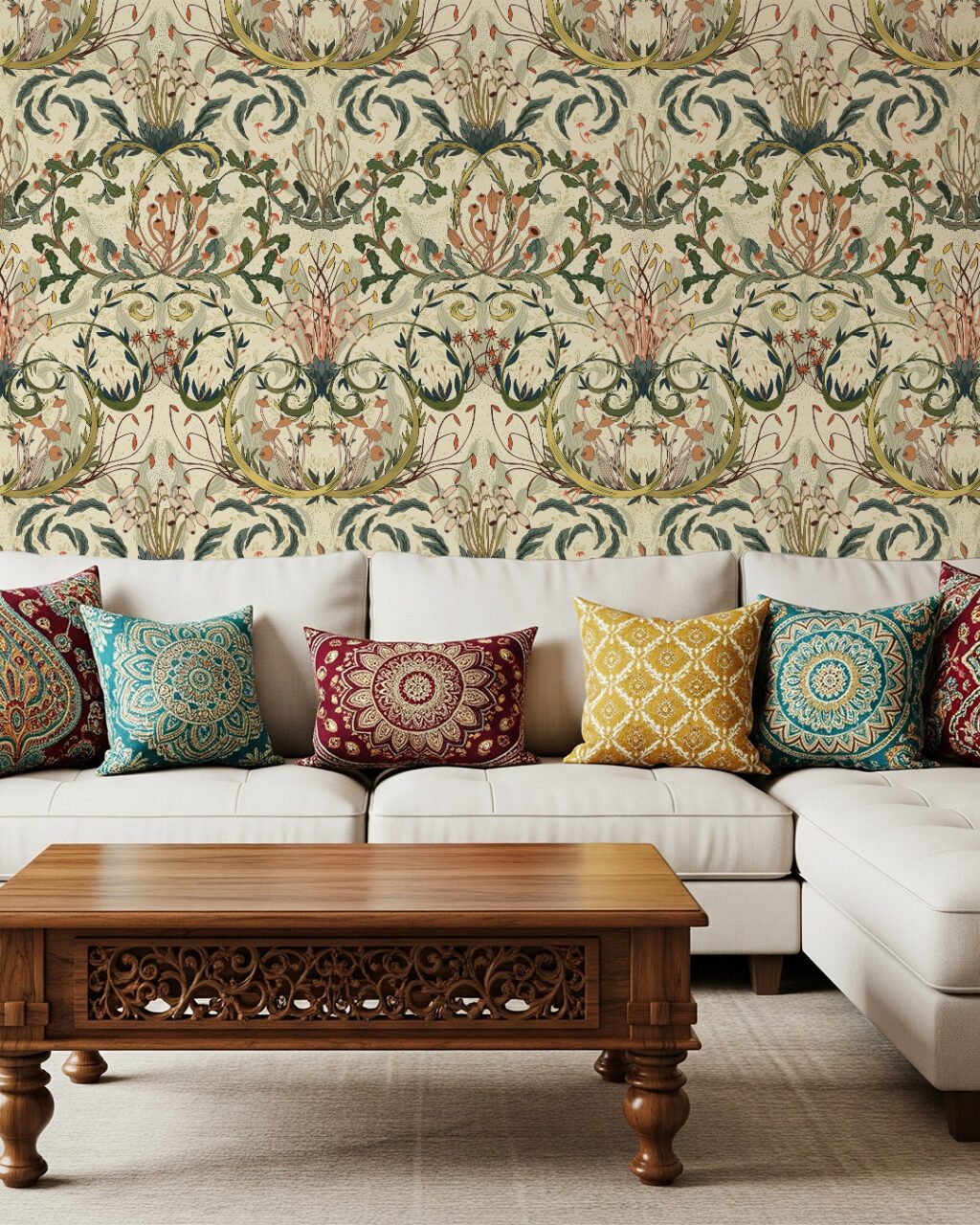
A bookshelf is often a functional piece of furniture, but by adding an eye-catching backdrop like damask wallpaper, you turn it into a curated focal point. This project is a popular entry point into DIY bookshelf makeover projects and is surprisingly manageable, even for beginners. The key is in the preparation and precise execution, ensuring the intricate pattern is aligned beautifully across the entire back panel.
Preparing Your Bookshelf
The first step in any successful wallpapering project is preparation. Since you are working with an elegant wallpaper and an intricate pattern, a smooth, clean surface is essential.
-
Remove Shelves and Contents: Completely empty the bookshelf. If the shelves are removable, take them out to access the back panel easily.
-
Clean and Repair: Thoroughly clean the back panel to remove dust and grime. Any holes or gouges should be filled with wood putty and sanded smooth.
-
Measure Accurately: Measure the width and height of the entire visible back panel. If the back panel is divided into separate sections by fixed upright supports, measure each section individually. Accuracy is critical, especially when working with repeating traditional patterns.
Cutting and Matching the Damask Pattern
Damask designs rely on symmetry and precise pattern matching to achieve their signature luxurious look.
-
Determine Pattern Repeat: Locate the repeat point of your damask design. This number will determine how much extra wallpaper you need and where to start your cuts.
-
Centering the Motif: For a truly custom, high-end look, it is crucial to center a dominant motif or element of the damask pattern within each section of the bookshelf. Start your first strip by aligning a major part of the pattern in the exact center of your largest panel.
-
Cutting Panels: Cut your wallpaper pieces, adding a few inches of excess to all sides for trimming. For multi-section bookcases, ensure the pattern flows seamlessly by matching the edges of the design across the vertical supports. This step is what makes the difference between a good and a professional-looking wallpaper a bookshelf project.
Application and Finishing Touches
The final steps involve careful application to secure the paper and achieve a flawless finish.
-
Apply the Wallpaper: If using peel-and-stick wallpaper, gradually peel back the liner while smoothing the paper onto the back panel, working from the center outward to push out any bubbles. If using paste, apply a thin, even coat directly to the back panel before carefully placing the wallpaper.
-
Smoothing and Trimming: Use a wallpaper smoother or squeegee to flatten the paper completely. A sharp utility knife and a straight edge are necessary to trim the excess paper precisely along the interior edges of the bookshelf. Take your time to create clean, crisp lines.
-
Reassemble and Style: Once the paper is fully adhered and dry, replace the shelves. Style the bookcase thoughtfully, allowing the elegance of the damask pattern to shine through. Keep styling items minimal and sophisticated to complement the rich backdrop.