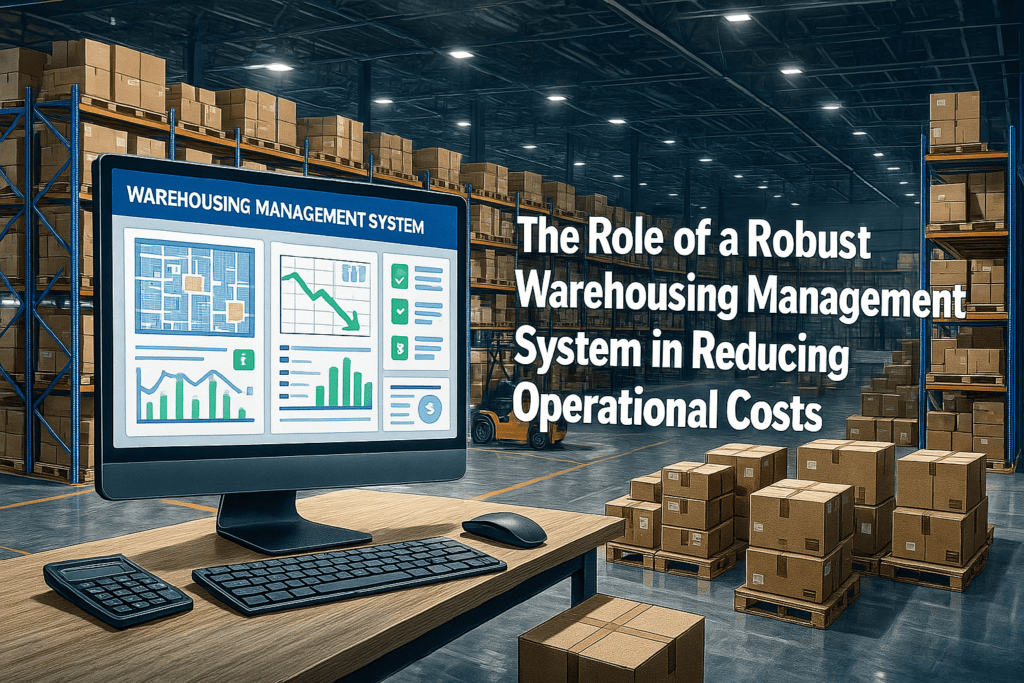
A warehouse is no longer just a place to store goods; it is a key part of the business. Every decision in the supply chain affects cost and efficiency. For Indian organisations, effective warehouse management directly impacts profitability, delivery speed, and customer satisfaction. Rising fuel prices, higher labour costs, and increasing demand for faster deliveries make efficiency essential. A strong Warehouse Management System (WMS) helps by integrating inventory control, workforce productivity, and resource usage. The result is a more efficient, cost-effective supply chain that ensures accuracy and consistency.
Why Operational Costs Spiral in Warehousing?
Prior to grasping how technology saves costs, it is crucial to look into why warehouses tend to suffer from financial inefficiencies. Most facilities in India are plagued with obsolete practices, manual recording, and disjointed processes. This results in:
- Overstocking because of defective demand forecasting.
- Underutilisation of warehouse space.
- Labour inefficiencies brought about by repetitive manual operations.
- Losses through misplaced or damaged items.
- Order fulfillment delays as a result of a lack of visibility across storage points.
Each of these problems leads to increased operating expenses, be it wasted space, excess labour hours, or excess customer complaints. Cumulatively, these inefficiencies drain profit margins over time and leave businesses behind their competitors.
How a Warehousing Management System Reduces Costs?
The presence of a warehousing management system gives companies transparency and control over such challenges. It turns old storage centers into perfectly coordinated processes that operate with precision and transparency. The cost-saving potential of these systems can be understood along several dimensions:
Optimal Space Utilisation
Space is arguably the most costly resource in warehousing. A management system uses every available square foot by plotting storage locations, allocating goods strategically, and minimising the need for over-expansion. This helps companies achieve maximum value from existing infrastructure.
Lower Labour Costs
Labour accounts for a large percentage of warehouse expenses. An effective system reduces the need for manual interventions through automation of tracking inventory, stock allocation, and data capture. With repetitive work simplified, there is reduced demand for workers in day-to-day tasks and allocated staff can be put towards higher-value tasks.
Inventory Accuracy
Stock record errors frequently result in over-buying or stockouts. A system that offers real-time inventory visibility eliminates such errors. Proper stock levels help keep capital uninvested in excess inventory and help save the costs of lost sales.
Faster Order Processing
Delays in finding products in the warehouse can prolong delivery schedules and operating time. Automatic tracking and smart product routing accelerate retrieval, resulting in quicker order fulfillment and lower overtime expenses.
Lower Product Damage
Inefficient storage and careless handling account for losses. A warehousing management system provides definite rules for handling, storing, and transporting goods, minimising the chances of damage and wastage.
Improved Forecasting and Planning
Insight derived from these systems is data-driven, enabling companies to predict demand more precisely. Thus, they can carry only the necessary volume of inventory, reducing the cost of carrying excess inventory.
The Role of Technology in Streamlining Warehousing Management
Whereas the advantages are obvious, the method with which technology promotes these enhancements is just as significant. From automation software, barcode technology, and real-time dashboards, managers gain full visibility into operations. Without relying on manual reconciliations, information moves fluidly between departments, bringing insight for decisions.
For companies that work across multiple Indian warehouse sites, a centralised system of warehousing management offers the advantage of process and performance consistency. It prevents duplicating work and generates economies of scale, such that efficiency at one location can be duplicated elsewhere.
Additionally, predictive analytics and AI-based modules in contemporary systems assist managers in pre-empting blockages, detecting wastage trends, and suggesting process redesign. With time, such insights enable a continuous improvement cycle, again reducing operating costs.
Workforce Productivity and Training
Warehouses often employ a large workforce, and inefficiencies in managing this human capital can lead to significant financial strain. By implementing digital systems, staff receive clear instructions on tasks, routes, and priorities. This structured workflow not only increases productivity but also minimises idle time.
Furthermore, a warehousing management system facilitates easy training for new workers. Rather than extensive onboarding procedures, employees are able to easily adapt to standardised protocols, helped along by easy-to-use technology. Training expenses are lowered, and the time taken before new employees make valuable contributions is diminished.
Challenges in Implementation
In spite of the obvious benefits, Indian companies are at times reluctant to implement warehousing management systems owing to initial investment or change aversion. Older ways of doing things, once ingrained, are hard to change. The long-term cost savings on operating costs far exceed initial hiccups. Proper planning, phased rollout, and employee involvement can overcome these impediments and unleash meaningful cost savings.
A Step Towards Sustainable Growth
Cutting costs is not simply about reducing operational costs; it is about creating an enduring model that fosters long-term expansion. A strong warehousing management system allows businesses to accomplish more with fewer resources, so that resources are utilised in a responsible manner without compromising customer expectations. By minimising wastage, improving accuracy, and increasing efficiency, businesses design a supply chain that is profitable and resilient.
Conclusion
In today’s competitive environment, the ability to reduce operational costs without compromising efficiency can make a substantial difference. A robust warehousing management system serves as the cornerstone of such efficiency, aligning every aspect of warehouse operations to optimise performance.
When businesses look for partners to implement such practices, they often turn to leaders who have built credibility in the logistics sector. Varuna Group, with its emphasis on operational excellence and technology-driven warehousing management, stands out as a trusted ally in this journey. By combining infrastructure, expertise, and a commitment to continuous improvement, Varuna Logistics exemplifies how businesses can reduce costs while raising standards.