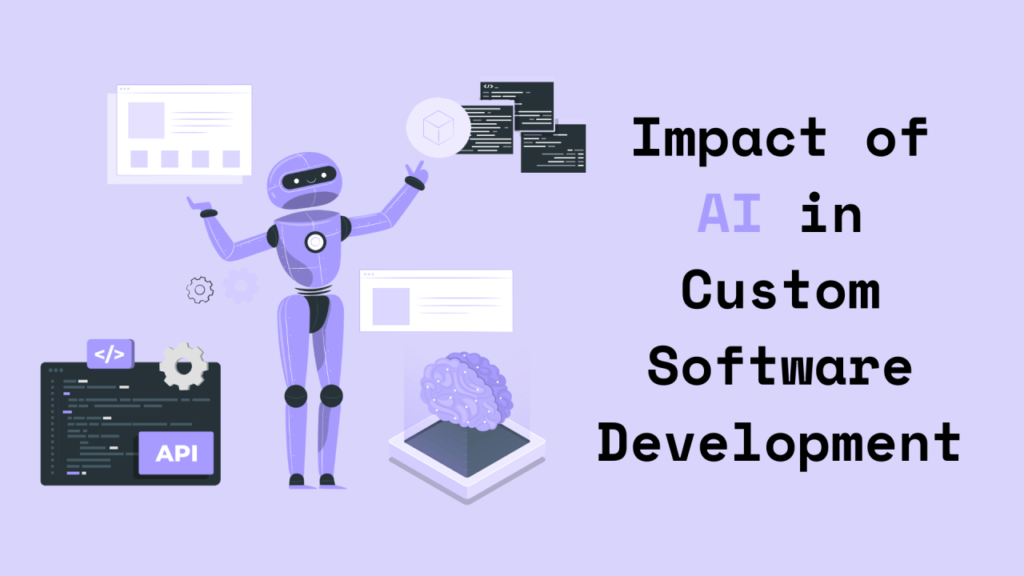
AI is transforming business operations. Many think AI can replace all software needs. While AI is powerful, it cannot handle every unique workflow. Businesses have specific processes, legacy systems, and niche requirements that generic AI tools cannot fully address. This is where custom software development becomes essential. Tailored software adapts to a company’s exact needs, integrates smoothly with existing systems, and ensures better control over features and security. The goal of this blog is to show why businesses cannot rely solely on AI. It explores how custom software development supports efficiency, flexibility, and long-term growth in an AI-driven world.
Understanding Custom Software Development
Custom software development means creating software specifically for a business’s unique needs. Unlike off-the-shelf solutions, it fits exact workflows and business rules. These solutions scale as the business grows and integrate smoothly with existing tools and systems. Key features include personalized workflows, flexible scalability, and strong integration capabilities. Even with AI tools, personalized software remains crucial because generic AI cannot address all business-specific challenges. Tailored software ensures efficiency, security, and smooth operations that off-the-shelf or AI-only solutions cannot guarantee. Businesses get full control over functionality, user experience, and future updates, making custom software a long-term strategic investment.
The Limitations of AI in Business
AI is powerful and automates many tasks, but it often works with generic, rule-based logic. It struggles to adapt to specific business processes or handle unique workflows. Many AI tools cannot fully integrate with legacy systems or address niche requirements that a business may have. Relying only on AI can leave gaps in functionality, create inefficiencies, and force teams to work around limitations. While AI can speed up repetitive tasks, it cannot replace the need for software tailored to a company’s exact needs. Custom solutions remain essential to ensure flexibility, control, and the ability to meet unique operational demands that AI alone cannot handle.
Key Benefits of Custom Software in the AI Era
Tailored Solutions for Unique Business Needs
Custom software adapts to a company’s specific workflows. It automates tasks that AI tools cannot fully manage. For example, a finance firm may need a unique approval workflow that standard AI software cannot replicate. Custom solutions ensure processes run smoothly without workarounds.
Seamless Integration with Existing Systems
Custom software easily connects with legacy systems, databases, and AI tools. This reduces data silos and inefficiencies. Businesses can have one unified system where information flows freely, helping teams make faster, informed decisions without switching between platforms.
Enhanced Control and Security
Companies get full control over features, updates, and security protocols with custom solutions. Many AI platforms limit visibility or customization, leaving sensitive data partially exposed. Custom software allows businesses to set precise permissions, enforce policies, and maintain compliance according to their own standards.
Scalability and Long-Term Flexibility
Custom solutions grow with the business. As operations expand or new needs arise, software can be updated without major disruptions. AI tools often have fixed limits, subscription constraints, or rigid features that may not scale with changing demands.
Competitive Advantage
Tailored software gives businesses a clear edge. Custom dashboards, reports, and automation can optimize operations in ways AI platforms cannot replicate. This allows companies to innovate faster, respond to client needs, and maintain efficiency that competitors using only generic AI may struggle to match.
Custom software works hand-in-hand with AI. While AI boosts productivity, tailored solutions ensure flexibility, security, and efficiency that generic tools cannot provide. Businesses gain control, adapt to unique workflows, and stay competitive in the AI era.
Practical Examples
A retail company uses AI to automate sales predictions and customer recommendations. Custom software manages inventory, tracks stock levels, and generates detailed analytics. This ensures orders are accurate and timely, which AI alone cannot handle.
In healthcare, AI assists in diagnostics and treatment suggestions. Custom software manages patient records, appointment scheduling, and compliance reporting. Doctors and staff can rely on accurate data while AI provides decision support.
Another example is a logistics firm. AI optimizes delivery routes, but custom software integrates with legacy systems, tracks shipments, and handles billing.
These cases show that combining AI with custom software creates stronger, more reliable systems. AI enhances efficiency, but tailored software ensures control, flexibility, and complete business coverage.
Challenges in Custom Software Development
Custom software has higher upfront costs than off-the-shelf solutions. It needs careful planning, design, and thorough testing. Skilled developers are required, and ongoing maintenance is essential to keep systems running smoothly. Time and resources must be invested to ensure the software meets business needs. Despite these challenges, the benefits outweigh the drawbacks. Tailored solutions offer better integration, flexibility, security, and scalability. In the AI era, custom software ensures businesses gain full control, maximize efficiency, and achieve long-term growth that generic AI tools alone cannot deliver.
Future of Custom Software with AI
AI and custom software work best together, enhancing each other’s strengths. Predictive analytics and automation integrate smoothly within tailored platforms. Businesses can combine AI capabilities with custom solutions to meet unique needs. Hybrid models allow companies to stay agile, scale efficiently, and respond quickly to market changes. Custom software provides control and flexibility, while AI adds speed and intelligence. Future-ready businesses adopt this synergy to boost productivity, improve decision-making, and maintain a competitive edge. AI does not replace custom software; it enhances its value.
Conclusion
Businesses cannot rely on AI alone. Custom software provides flexibility, control, and a clear competitive edge. Combining AI with tailored solutions maximizes efficiency, boosts productivity, and ensures systems fit unique workflows. Investing in both allows companies to automate intelligently while keeping full control over processes. This hybrid approach helps businesses stay agile, reduce risks, and maintain long-term growth in a fast-changing market.