If you are in a business where your workers have to handle risky chemicals, then a hazardous chemical labels can be a hero for your business. They help your workers to handle the chemicals safely to reduce the risk of injuries and accidents.
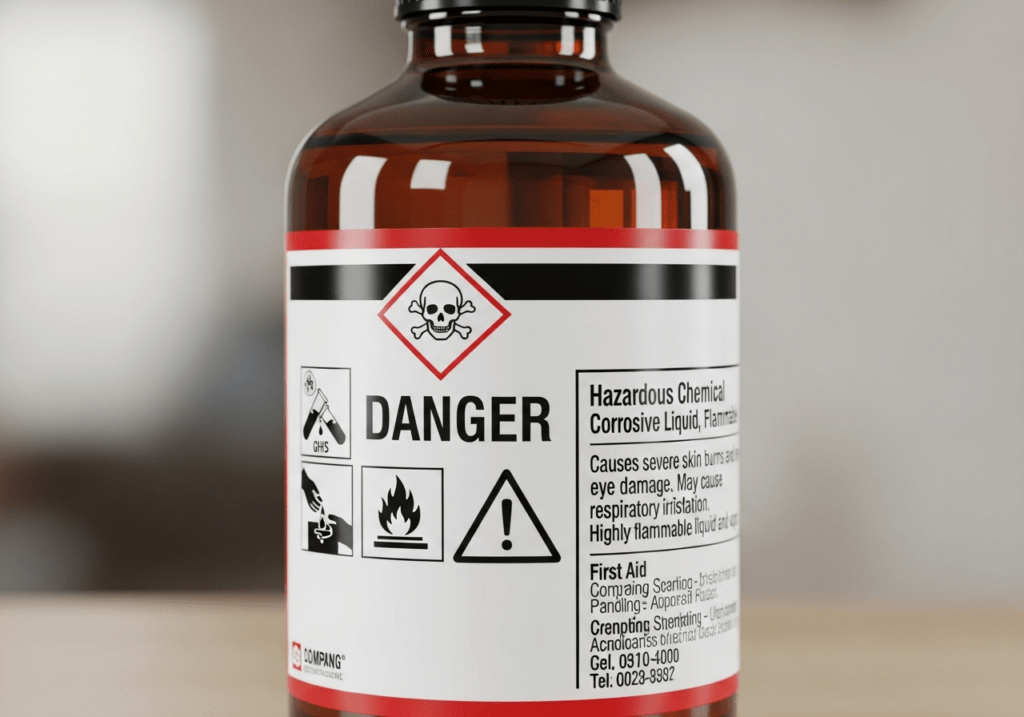
When the GHS introduces safety labels, they become universal, and it becomes easier to identify risk factors. GHS safety labels are made with the main 6 elements, and to make it more effective, there are 4 more elements you can add to the label.
This guide will help you know about the 10 important elements that should be on the safety labels.
The Six GHS Safety Essentials (Must have)
-
Product identifier
- The label should have the name of the chemical so that the person handling the chemical can understand what they are working with.
- The name of the chemical should match the chemical data sheet. This sheet has the detailed information and safety steps to mitigate the risk factors.
- Signal word
- There are two main words that are used to showcase the level of risk involved in the chemical. This can help the employee before they proceed further with any other activity.
- Danger: If the chemical is very hazardous and involves a serious risk, then this word should be on the label.
- Warning: If the risk is not that serious, but you still have to be careful, then this word is used.
- Hazard pictograms
- This can be a very effective way to warn the workers about the type of risk the chemical poses. There is a border of red diamond shape inside which a black colour symbol is drawn.
- You may have seen a sign of flame that shows fire risk, and a skull with cross lines shows the risk of poisonous chemicals.
- Anywhere you go, this picture will remain the same. It makes the risk identifier process easier for those who have difficulty reading.
- Hazard statements
- This is a short statement that talks about the actual risk involved. If it harmful for your skin, then it should be mentioned on the label that it may cause skin irritation. When a person knows the actual risk, they become extra careful.
- Preventive description
- It should have a precautionary description on what to do for safe handling of hazardous chemicals. These descriptions include what to wear, where to store, whom to connect with if something happens and what to do after using the product.
- Supplier identification
- It should have the name, address and contact number of the company or supplier that supplies the chemicals. If something happens, then workers can directly connect to them, and the supplier can guide them on what to do.
Four more critical safety details
The first six elements are legal requirements, and when you add all four more vital elements, you can provide complete safety to your workers.
- Percentage of ingredients
- If the product is a mixture of two or three chemicals, then it should mention the percentage of hazardous chemicals. When you know the mixture, you are using has high percentages of hazardous chemicals, you will become more careful and will not use it for any sensitive areas.
- To know the percentages of all the chemicals involved, you can refer to the safety data sheet.
- Date of manufacture/expiration
- It can be beneficial for your workers if you mention the date of the manufacturing or when it should be disposed of. Because some chemicals become riskier as time passes, and they also lose their actual property after a certain time.
- It is not only good for safety purposes but also helpful for the productivity of your business.
- Lot or batch number
- This is the code for a particular batch in which the chemical is manufactured. If you find any defect in the product or there is any problem with the labels, then you can directly track all products without manually testing them.
- Recommended personal protective equipment
- The GHS includes this step, but it should be in detail. It shows that you should wear gloves, but which type of gloves? Not every pair of gloves can provide you with safety.
- Along with that information, you should also mention which type of gloves or safety kit would be required to handle a particular chemical.
- GHS label has six elements, but with the help of custom safety signs services, you can add these four signs too.
Conclusion
Handling the hazardous chemical can be done effectively and safely with the use of these safety signs. Safety signs should have all the information and diagrams that can alert worker to perform their job safely. It should have the name of the chemical, risk involved, how to handle and whom to contact in an emergency. These are the main elements, and following these, you can have all ten elements in your safety label.